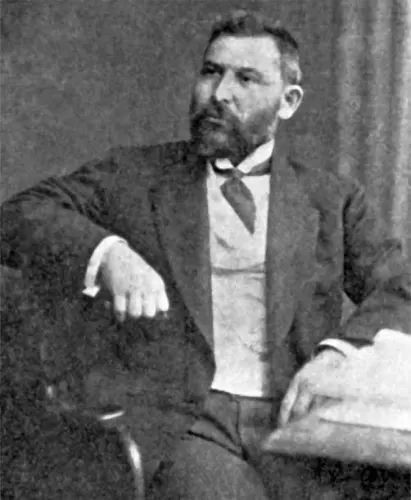
(1869–1932)
The most outspoken positivist of his generation of Ottoman intellectuals, Cevdet, probably of Kurdish origin, was born in Arapkir, Turkey. He received his education in medicine but became a prolific writer at a relatively young age. He became one of the founding members of the Ottoman Society for Union and Progress (Ittihat ve Terakki Cemiyeti), the most important political movement to arise in the Ottoman Empire in the nineteenth century. Because of his political activities and opposition to Abdulhamid II, he was arrested and sent into exile in Libya. From there, he went to Europe and joined other Ottoman intellectuals living abroad. He began to publish his famous journal Ictihad in 1904, which he continued with some interruptions until his death in 1931. Because of his political activities, he was sentenced again to life in prison in absentia. In 1905 he moved to Egypt, where he lived until 1911.
In addition to Ictihad and his other works on a variety of subjects, Cevdet translated a large number of books from French into Turkish with the goal of making modern European ideas available to the Turkish reader. His translation of Reinhart P. A. dozy’s Essai sur l’histoire de l’islamisme (1897) as Tarih-i islamiyet (1908) led to criticism from many Islamist thinkers because of dozy’s polemical study of the life and personality of the Prophet of Islam. After the turn of the century, he devoted his whole time to writing and translation, and withdrew almost completely from politics. In addition to his modernist publications, he also produced a number of translations from rumi and ‘Umar khayyam. Even though he was a radical modernist and positivist and many of his ideas were adopted by Kemal Atatürk and his followers, he did not take part in the politics of the newly established Turkish Republic. He died in Istanbul in 1932.
 Visit Turkey