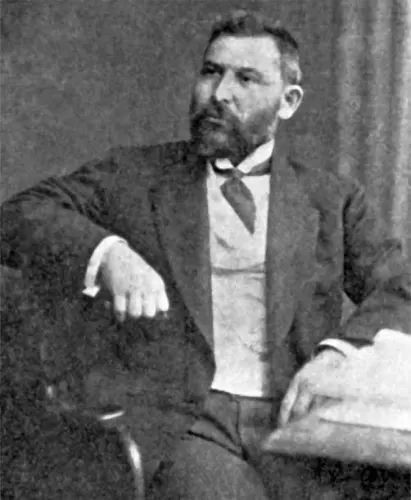
The most outspoken positivist of his generation of Ottoman intellectuals, Cevdet, probably of Kurdish origin, was born in Arapkir, Turkey. He received his education in medicine but became a prolific writer at a relatively young age. He became one of the founding members of the Ottoman Society for Union and Progress (Ittihat ve Terakki Cemiyeti), the most important political movement to arise in the Ottoman Empire in the nineteenth century. Because of his political activities and opposition to Abdulhamid II, he was arrested and sent into exile in Libya. From there, he went to Europe and joined other Ottoman intellectuals living abroad. He began to publish his famous journal Ictihad in 1904, which he continued with some interruptions until his death in 1931. Because of his political activities, he was sentenced again to life in prison in absentia. In 1905 he moved to Egypt, where he lived until 1911. In addition to Ictihad and his other works on a variety of subjects, Cevdet translated a large number of books from French into Turkish with the goal of making modern European ideas available to the Turkish reader. His translation of Reinhart P. A. dozy’s Essai sur l’histoire de l’islamisme (1897) as Tarih-i islamiyet (1908) led to criticism from many Islamist thinkers because of dozy’s polemical study of the life and personality of the Prophet of Islam. After the turn of the century, he devoted his whole time to writing and translation, and withdrew almost completely from politics. In addition to his modernist publications, he also produced a number of translations from rumi and ‘Umar khayyam. Even though he was a radical modernist and positivist and many of his ideas were adopted by Kemal Atatürk and his followers, he did not take part in the politics of the newly established Turkish Republic. He died in Istanbul in 1932.
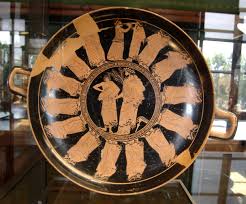
Procession of male pairs (possibly Apaturia festival), Attic red-figure kylix, ca. 480 BC (by User:Bibi Saint-Pol via Wikimedia Commons)
(Ἀπατούρια), an ancient Greek festival held annually by all the Ionian towns except Ephesus and Colophon (Herodotus i. 147). At Athens it took place in the month of Pyanepsion (October to November), and lasted three days, on which occasion the various phratries (i.e. clans) of Attica met to discuss their affairs. The name is a slightly modified form of ἀπατόρια = ἁμαπατόρια, ὁμοπατόρια, the festival of “common relationship.” The ancient etymology associated it with ἀπάτη (deceit), a legend existing that the festival originated in 1100 B.C. in commemoration of a single combat between a certain Melanthus, representing King Thymoetes of Attica, and King Xanthus of Boeotia, in which Melanthus successfully threw his adversary off his guard by crying that a man in a black goat’s skin (identified with Dionysus) was helping him (Schol. Aristophanes, Acharnians, 146). On the first day of the festival, called Dorpia or Dorpeia, banquets were held towards evening at the meeting-place of the phratries or in the private houses of members. On the second, Anarrhysis (from ἀναρρύειν, to draw back the victim’s head), a sacrifice of oxen was offered at the public cost to Zeus Phratrius and Athena. On the third day, Cureotis (κουρεῶτις), children born since the last festival were presented by their fathers or guardians to the assembled phratores, and, after an oath had been taken as to their legitimacy and the sacrifice of a goat or a sheep, their names were inscribed in the register. The name κουρεῶτις is derived either from κοῦρος, that is, the day of the young, or less probably from κείρω, because on this occasion young people cut their hair and offered it to the gods. The victim was called μεῖον. On this day also it was the custom for boys still at school to declaim pieces of poetry, and to receive prizes (Plato, Timaeus, 21 b). According to Hesychius these three days of the festival were followed by a fourth, called ἐπίβδα, but this is merely a general term for the day after any festival.
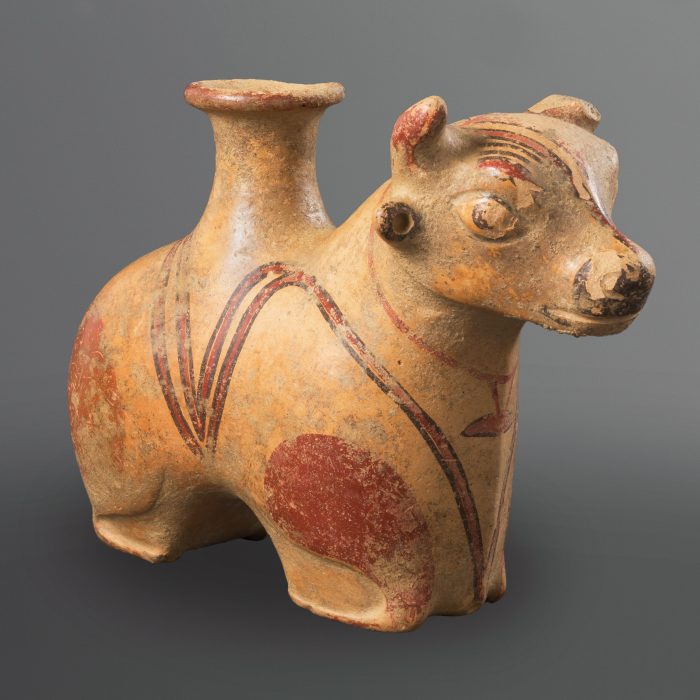
This hand-modeled rhyton represents a bovid seated with its legs folded under its body, which may be identified as a bull or a calf. The terracotta is now of a yellow ocher color, highlighted with reddish brown and black paint for the details of the coat (patches on the shoulders, haunches and head), for the tail and for the lines that probably indicated garlands (around the chest, shoulders, collar, head and hindquarters).
A tall cylindrical opening, provided with a rounded lip and certainly used to fill the vessel, is placed on the back of the animal, while a small circular opening, pierced at the bottom of the chest, between the front legs, allowed limited pouring of the liquid by the simple covering of a finger.
The body of the animal is squat, with powerful proportions and well rounded, though poorly detailed and hardly realistic volumes. The lower legs, however, are represented only by thin stems in low relief, which terminate in hooves and constitute the support points of the vessel.
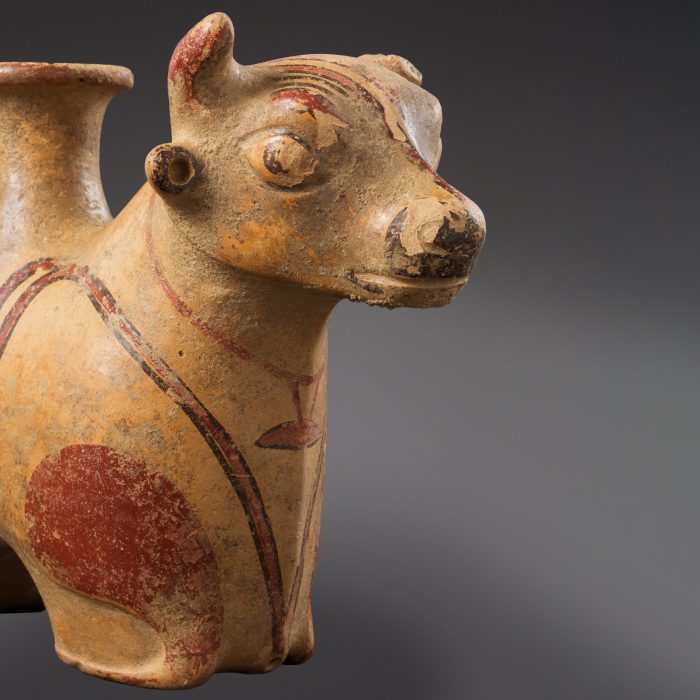
The head, which enables us to confidently identify the animal as a bovid, has a strong and massive structure that reveals the triangular shape of the skull. Unlike the body, its modeling is more realistic, both in the overall shape and through the presence of many accurate anatomical details (eyes, brows, incised nostrils, horizontal mouth, jaw in relief, etc.) highlighted by red and black paint.
The ornamental motifs covering the body and the head (triangles on the forehead and pendants between the horns) characterize this animal as sacred, perhaps sacrificial: like many other related rhyta, this vessel was no doubt used for libations during religious ceremonies, the precise nature of which still remains enigmatic. It can even be imagined that by depicting the exact pattern of an animal intended for sacrifice, the vessel would somewhat replace the real animal, like a sort of permanent offering.
While belonging to the rich and large series of animal-shaped rhyta originating in Anatolia and in the Near East from the late 2nd millennium B.C., this example does not currently have any specific parallels, which prevents us from suggesting a precise chronology: it should nevertheless be dated between the late 8th and the 5th century B.C. Among the best comparisons, one should mention the rhyta in the shape of a seated horse (from Maku, Western Azerbaijan Province, Iran) and in the shape of a standing horse (from Susa, Khuzestan Province, Iran), also adorned with richly painted patterns (8th-7th century B.C.), as well as the terracotta example from Ardabil, slightly coarser and darker (late first half of the 1st millennium B.C.). In central and eastern Anatolia, the ornaments in the shape of bulls’ heads adorning the cauldrons from Gordium (Tumulus MM, late 8th century B.C.) are typologically similar, like the protome of a rhyton in the shape of a horn found in Armavir (Armenia, 6th-5th century B.C.).
Technical and stylistic similarities also exist with a type of ceramic (yellow ocher background, linear decoration painted in red and black) from the eastern regions of Anatolia and that archeologists date to the 7th century B.C.
Rhyta were widespread in the ancient world: the first documented examples are those of Tell Halaf (Syria, 6th-5th millennium B.C.), but their shape quickly became the norm in Mesopotamia, in Egypt, in the Aegean cultures of the Bronze Age and, later, in classical Greek and Roman civilization. Although rhyta may vary in their typology, they are almost always linked to the world of animals and fantastic beings: they may be modeled in the shape of an animal (like our example) or in the shape of a horn with the protome of an animal or a monster; or, in the classical world especially, they may be composed of a wide mouth with a handle and of a head depicting various animals, women, blacks, satyrs, small groups with two figures, etc. These vessels were used primarily to make libations by pouring the offered liquid to the deity (their Greek name, ρυτοσ, means drinking, pouring vessel).
Art market, prior to 1964;
Ex Maurice Boss Collection, Geneva, Switzerland; ex Dr. L. Collection, Switzerland, acquired in 1964.
The identification of this with Classical Miletos, long the focus of fervent scholarly debate, is of crucial significance for the interpretation of the historical geography of Late Bronze Age western Anatolia. If it is placed much further north near the Sea of Marmora, in the area here identified as Wilusa, then a whole string of geographical locations has to follow. This did seem perfectly arguable, along with locations for a number of lands further east and closer to the Hittite homeland, before the discovery of new inscriptions of Tudhaliya IV. All these clarify points of geography, not least among these being the Bronze Tablet. Linguistically, there has been some doubt about the identification of Millawanda with the Greek form Miletos, owing to the disparity with the Late Bronze Greek (Mycenaean) form of the name. On the other hand, the Hittites, unfamiliar with this place-name, may well have given it a form more acceptable to them, by adding the suffix -wanda, occurring in some 50 names, while the prefix mil- is common in Hittite contexts. The weight of probability therefore now favors equating Millawanda and its alternative form Milawata with Miletos, fitting in with the archaeological evidence. In the third year of Mursili II, Millawanda became in some way involved in an anti-Hittite alliance led by Uhhaziti, king of Arzawa, and by Ahhiyawa. Hittite commanders were dispatched against Millawanda. Though this may have been little more than a raid, the destruction of Level II at Miletos, revealed by excavations, could be connected with this Hittite intervention, lacking textual support. Miletos throve as a port, on the maritime trade, yet was geographically isolated from the Anatolian hinterland, explaining the evident inability of Mursili II to retain control of Millawanda-Miletos. The pottery of both Troy and Millawanda, however, shows changes in the phase termed by Mycenaean scholars Late Helladic IIIB which could reflect the destruction of greater Arzawa by Mursili II and its reduction to a number of vassal kingdoms.
valley to Iyalanda-Alinda. From the city of Iyalanda he attacked the land of that name, then advancing to the boundary of Millawanda, which probably extended across the isthmus of the peninsula on which Millawanda stood. There he negotiated the surrender of the renegade fugitive Piyamaradu. It is quite clear that Millawanda was now ruled by Ahhiyawa. Although it might be thought that Millawanda was of major significance to the Hittite kings, it meant much more to the Mycenaean merchants and settlers from Ahhiyawa. In fact, Millawanda is mentioned in only three Hittite sources, the Extended Annals of Mursili II and the Tawagalawa and Milawata letters of Hattusili III and Tudhaliya IV respectively, in the latter commanding but three lines. The Hittite kings were more concerned with territories a little removed from the coast; and it seems that Tudhaliya IV, in addressing “my son,” was writing to Tarkasnawa, king of Mira, who was holding the ruler of Wilusa, Walmu. In the generations following the end of the Hittite Empire and of the Late Bronze Age world, many settlements in western Anatolia perished; but major communities, including Miletos, survived. Indeed they prospered, with the whole region, benefiting from the immigration of Aeolian and Ionian settlers from across the Aegean Sea.
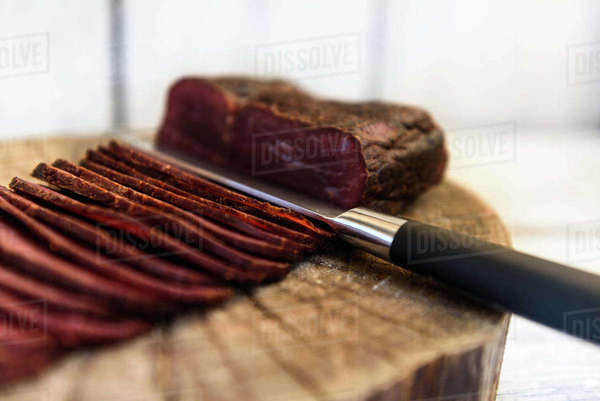
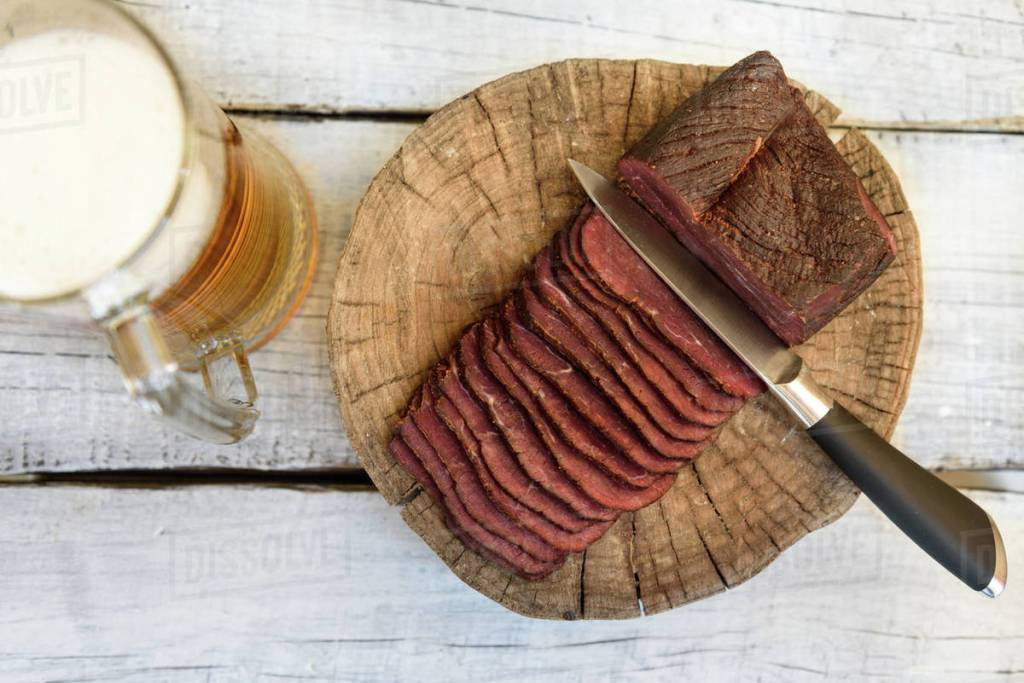
pastrami beer in a glass knife on a wooden table contributor: Omelnickiy
The Turkish horsemen of Central Asia used to preserve meat by placing slabs of it in pockets on the sides of their saddles, where it would be pressed by their legs as they rode. This pressed meat was the forerunner of today’s pastirma, a term which literally means ‘being pressed’ in Turkish, and is the origin of the Italian pastrami. Pastirma is a kind of cured beef, the most famous being that made in the town of Kayseri in central Turkey.
The 17th century Turkish writer Evliya Çelebi praised the spiced beef pastirma of Kayseri in his Book of Travels, and Kayseri pastirma is still regarded as the finest of all. Good quality pastirma is a delicacy with a wonderful flavour, which may be served in slices as a cold hors d’oeuvre or cooked with eggs, tomatoes and so on. Although pastirma may also be made with mutton or goat’s meat, beef is preferred. Cattle, mainly from the eastern province of Kars, are brought to Kayseri, where they are slaughtered and the meat made into pastirma at factories northwest of the city. The different cuts of meat produce different types of pastirma, 19 varieties from a medium-sized animal and 26 from a large. Extra fine qualities are those made from the fillet and contre-fillet, fine qualities are made from cuts like the shank, leg, tranche and shoulder, and second quality from the leg, brisket, flank, neck and similar cuts. The many tons of pastirma produced in Kayseri is almost all sold for domestic consumption all over Turkey.
Istanbul and Adana are the provinces with the largest consumption. The meat undergoes a series of processes lasting about a month. The freshly slaughtered meat rests at room temperature for 4-8 hours before being divided into joints suitable for pastirma making. These are slashed and salted on one side, stacked, and left for around 24 hours. They are then salted on the other side, stacked and left for a further 24 hours. Then the joints are rinsed in plenty of water to remove the excess salt, and dried in the open air for a period varying between three and ten days, depending on the weather. After some further processing, the meat is hung up to dry again, this time in the shade and spaced out so that the joints do not a touch one another. After 3-6 days, they are covered with a paste of ground spices known as çemen, and left to cure for 10-24 hours in hot weather, and 1-2 days in cold weather. Then the excess çemen is removed, leaving a thin layer, and the joints dried again. Finally the pastirma is ready for the table. The çemen paste covering the slabs of pastirma is both an important factor in the flavour, and protects the meat from drying and spoiling by contact with the air, which would cause the fat in the pastirma to oxidise and give a bitter flavour. ÿemen is composed of crushed classical fenugreek seeds, garlic and chilli pepper mixed to a paste with a little water. Çemen paste is also sold separately as a savoury paste for spreading on bread. When buying pastirma, note that the redder the colour, the fresher the pastirma. Over time it takes on a browner tone, and becomes firmer in texture. Good quality pastirma, whether fresh or mature, is delicious, and it is only a matter of taste which you prefer. Gourmets do not approve of pastirma sliced by machine but insist on the thin slices being cut by hand with a sharp meat knife. They also reject ready cut slices of pastirma as sold packaged in some delicatessens and supermarkets. Pastirma is delicious with fresh crusty bread, grilled lightly over charcoal, fried in butter with eggs or in layered pastry börek. Bean stew with pieces of pastirma is another popular dish in Turkey.
The Ak Koyunlu was one of two rival Turkoman federations, or dynasties (the other being the Kara Koyunlu, or Black Sheep), that ruled parts of Kurdistan during much of the 15th century after the death of the great Mongol conqueror Tamerlane in 1405. Early on, the Sunni Ak Koyunlu had Amed (Di-yarbakir ) as their capital, while the Shia Kara Koyunlu had their center northeast of Lake Van. The Kurds did not play a major role in the armed struggles of the two.
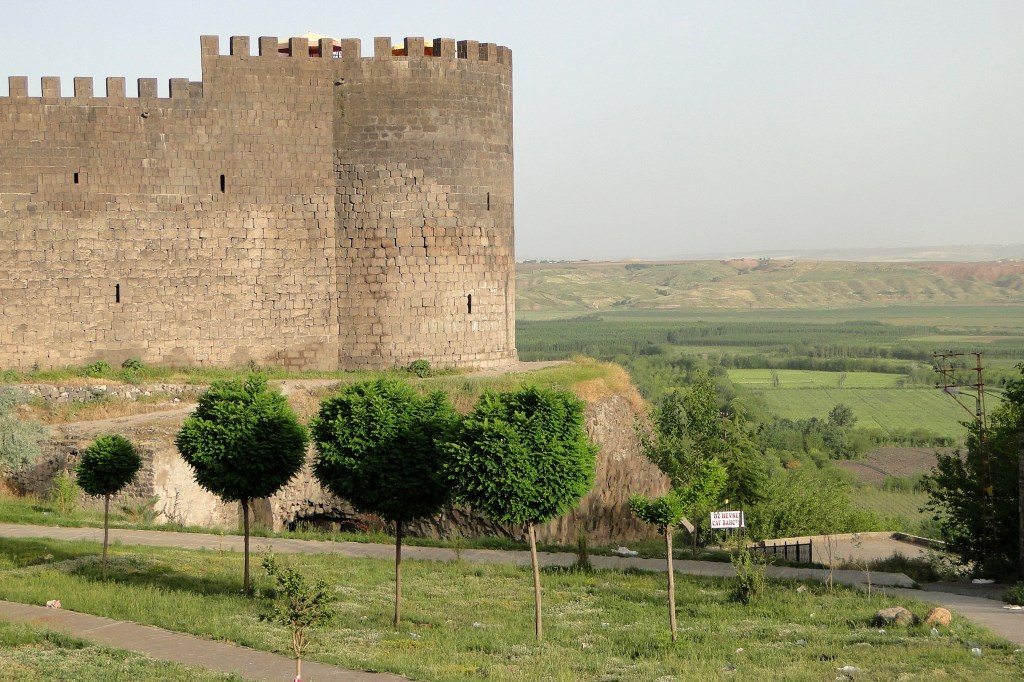
Keçi Burcu, the Goat Tower, a section of the city wall of Diyarbakir photographed by Adam Jones from Kelowna, BC, Canada
In 1467, the able Ak Koyunlu leader Uzun Hasan destroyed his rival Kara Koyunlu federation and eventually extended his power over most of Kurdistan. According to the Sharafnama , Uzun Hasan then “took it upon himself to exterminate the leading families of Kurdistan, especially those who had shown themselves devoted to or subjects of the Kara Koyunlu sultans.” He made his new capital in Tabriz in what is now Iran . After Uzun Hasan’s death, the Iranian Safavid leader Ismail destroyed the Ak Koyunlu in 1502 and proclaimed himself shah.
The origin of the Āq Qoyunlū tribes likewise remains obscure. Certain groups may have migrated from Central Asia to Anatolia in the 5th/11th century under Saljuq leadership and others in the wake of the 7th/13th-century Mongol invasion. By the end of the Il-khanid period in the mid-8th/14th century, the Āq Qoyunlū were migrating between summer pastures (yeylāq) in Armenia around Sinir, east of Bayburt, and winter pastures (qešlāq) around Kiḡi, Palu, and Ergani in Dīār Bakr.
Their political organization was loose. The highest decision-making authority was a council (kengač) of amirs and tribal chiefs (boy ḵānları) who determined military matters and the recurrent issue of succession to the sultanate; the council’s decisions were binding on the sultan. Military and political control of the adjacent villages and towns, necessary for the safety of the pasturage, was maintained by the army, which consisted largely of tribal levies supporting themselves through their own lands and booty. In addition, the sultan maintained a force of paid personal guards (ḵawāṣṣ) who were recruited from several different nomadic and semi-nomadic groups. The revenue of the Āq Qoyunlū came from taxes and dues levied on the sedentary population of Armenians, Kurds, and Arabs, as well as tolls collected along the main trade routes through eastern Anatolia.
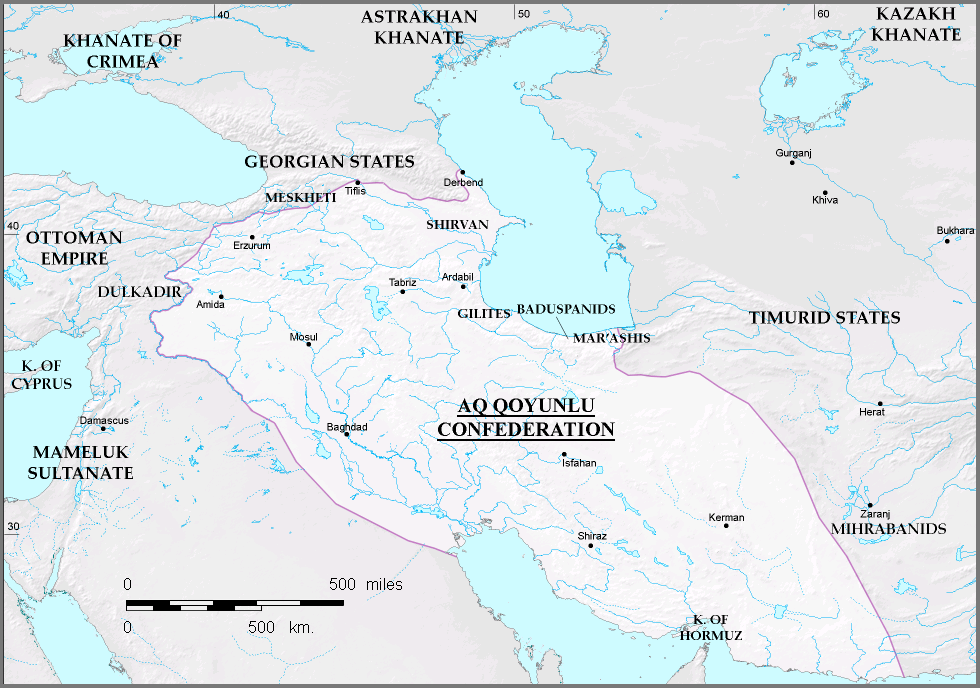
Their territory bordered on lands occupied by other Turkman confederation, namely the Qara Qoyunlū area north of Lake Van, the steppe grazed by the Döḡer east of the middle Euphrates around Rohā (Orfa), and the Ḏu’l-Qadr region west of the river. The Ḏu’l-Qadr confederation had submitted to the suzerainty of the Egyptian Mamluks, whose empire thus stretched up to Malaṭya. Further west lay the Qaramān principality and, north of it, the Eretna principality centered on Kayseri and Sīvās, the strongest of the small states formed in Central Anatolia after the collapse of the Il-khanid Empire. To the north of the Āq Qoyunlū were the Christian kingdoms of Trebizond and Georgia.
In the decade 740-50/1339-49 there were frequent armed clashes between the forces of Trebizond and those of Ṭūr-ʿAlī b. Pahlavān, the first Āq Qoyunlū leader mentioned in mutually independent sources. Peace was arranged in 753/1352 through the marriage of Maria Komnene, a sister of the ruler of Trebizond, Alexios III (1349-90), to Ṭūr-ʿAlī’s son Faḵr-al-dīn Quṭlu. Renewed matrimonial links in later generations maintained the peace, and Trebizond was free from Āq Qoyunlū attacks until it fell to the Ottomans in 865/1461. Ṭūr-ʿAlī died some time between 753/1352 and 764/1363. Under his successor Quṭlu, the Āq Qoyunlū began to intervene in the internal conflicts of the Eretna state. They became its nominal vassals in 783/1381 but supported rebellious military chiefs at Arzanǰān (Erzincan) when Qāżī Borhān-al-dīn (also a prominent poet in Turkish) made himself sultan at Sīvās. When Quṭlu died in 791/1389, the leadership first passed to his son Aḥmad, but Aḥmad’s reckless wavering in the struggles between Sīvās and Arzanǰān finally led to his replacement by his brother Qara Yoluz (or Yülük) ʿOṯmān Beg (on this name, see Roemer, “Das turkmenische Intermezzo,” p. 271, n. 26). In 800/1398 Qara ʿOṯmān revolted against Qāżī Borhān-al-dīn and killed him in battle.
Disorders in northern Syria following the deaths of Qāżī Borhān-al-dīn and the Mamluk sultan Barqūq (r. 784-801/1382-99) gave occasion for conflict between the expanding Ottoman power and the westward-moving conqueror Tīmūr. Voluntarily joining Tīmūr in 802/1399-1400, Qara ʿOṯmān led the vanguard in Tīmūr’s campaigns against Sīvās, whose defenders received Ottoman support (802-03/1402), and against the Mamluk dependencies; he also participated in the battle of Ankara (804/1402), which ended in a crushing defeat for the Ottomans. In recompense, Tīmūr granted him the rank of amir, confirmed his leadership of the Āq Qoyunlū confederation, and made the Bayandor family custodians of the
of the fortress city of Āmed (Dīār Bakr) which before 796/1394 had been held by the Artuqids, a clan of the Döḡer tribe. This is apparently how the Āq Qoyunlū first came into possession of Āmed, which was to be their capital for almost seventy years.
After Tīmūr’s death in 807/1405, Qara ʿOṯmān maintained good relations with his successors. By contrast, the Qara Qoyunlū who had been forcibly subdued by Tīmūr, shook off Timurid suzerainty. Under Qara Yūsof, their leader from 792/1390 to 823/1420, they expelled Tīmūr’s grandson Abū Bakr and killed the latter’s father, Mīrānšāh, the governor of Azerbaijan; they then defeated the Jalayerids to gain control of Baghdad and ʿErāq-e ʿArab (Mesopotamia), conquered parts of Georgia, and penetrated deeper into Iran. The Timurid sultan Šāhroḵ was obliged to launch three campaigns (823-24/1420-21, 832/1429, and 838-39/1434-35) to check their expansion and reimpose his suzerainty. Šāhroḵ’s interventions, together with conflicts among the sons of Qara Yūsof, who had died at the time of the first campaign, weakened the position of the Qara Qoyunlū. In the following years they lost large areas in the west to the Āq Qoyunlū.
Between 823/1420 and Qara ʿOṯmān’s death in 839/1435, the Āq Qoyunlū established their authority in Armenia and Dīār Bakr and moved into Dīār Możar and the western part of Dīār Rabīʿa, an expansion which brought them in conflict with the formerly friendly Egyptian Mamluk sultanate. Accordingly, the Qara Qoyunlū allied themselves with Egypt while the Āq Qoyunlū joined with the Timurids, who were then contesting Egyptian hegemony in the Red Sea; Qara ʿOṯmān also provided support for Šāhroḵ’s expeditions into Azerbaijan. During the third campaign, the aging Āq Qoyunlū leader, at Šāhroḵ’s behest, challenged Qara Yūsof’s son Eskandar to battle near Erzurum, but suffered a severe defeat; he was put to death in Ṣafar, 839/August-September, 1435, and his head was sent by Eskandar to the Mamluk sultan Barsbay (r. 825-41/1422-38) in Cairo.
Qara ʿOṯmān was the real founder of the Āq Qoyunlū state. Under his rule, the confederation not only acquired more territory but also gained support through additional tribes drawn to him by his successes. There are indications that the mainly Christian sedentary inhabitants were not totally excluded from the economic, political, and social activities of the Āq Qoyunlū state and that Qara ʿOṯmān had at his command at least a rudimentary bureaucratic apparatus of the Iranian-Islamic type. Even so, the Turkman military elite clearly remained dominant. From 827/1424 onward, in the hope of counteracting the centrifugal tendencies inherent in a tribal confederation and making the principality more cohesive, Qara ʿOṯmān assigned newly conquered territories to his sons rather than to tribal chefs, but this policy did not produce the expected results (Wood, The Aqquyunlu, pp. 66-70).
Qara ʿOṯmān’s death was followed by prolonged succession struggles in which not only the Mamluks, who had gained temporary recognition from some of the Āq Qoyunlū chiefs, but also the Ottomans, intervened. Qara ʿOṯmān’s designated successor, ʿAlī, could not hold his ground against the claims of his brothers, uncles, and cousins, and in 841/1438-39 he abdicated and went into voluntary exile in Egypt. His brother Ḥamza was then the most powerful Āq Qoyunlū chief, but he died in 848/1444 before he had been able to eliminate all rivals. The struggle for leadership resumed between Shaikh Ḥasan, a son of Qara ʿOṯmān, and ʿAlī’s son Jahāngīr. The situation in eastern Anatolia became critical when Šāhroḵ, the Āq Qoyunlū’s protector and the Qara Qoyunlū’s nominal suzerain, died in 850/1447. Succession disputes in Herat gave the Qara Qoyunlū chief, Jahānšāh b. Qara Yūsof, the chance to secede from the Timurid empire and proclaim himself sovereign. With support from certain Āq Qoyunlū tribal chiefs, he set out on a campaign against Jahāngīr in 854/1450 and, after conquering large parts of Armenia, besieged him in Āmed. Jahāngīr surrendered in the spring of 856/1452 and acknowledged Jahānšāh’s suzerainty. The peace treaty was concluded without the knowledge of Jahāngīr’s younger brother Ḥasan, known as Uzun Ḥasan (Long Ḥasan), who considered it a betrayal. Uzun Ḥasan successfully resumed the war with the Qara Qoyunlū and in the autumn of 856/1452 seized Āmed in a bloodless coup while Jahāngīr was away on a military expedition in Kurdistan (Woods, The Aqquyunlu, p. 91). Repudiating the Qara Qoyunlū suzerainty that his brother had recognized, he sent the keys of the fortress as a token of vassaldom to Cairo and received in return a diploma of appointment to the governorship of Āmed. Jahāngīr made several attempts to recapture Āmed; despite reinforcements from Jahānšāh’s army, he was finally defeated in 861/1457.
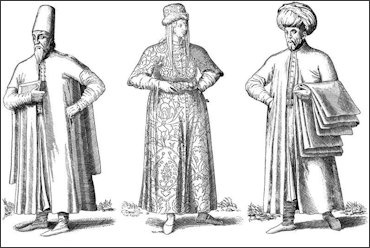
The word millet comes from the Arabic word for nation, milla, but in the Ottoman Empire it came to mean a religious community, specifically, non-Muslim religious minorities represented within the empire by an official political leader. Official Ottoman correspondence dealing with the non-Muslims of the empire in the early 19th century consistently affirmed that nonMuslims were organized into three officially sanctioned millets: Greek Orthodox, headed by the ecumenical patriarch, Armenians, headed by the Armenian patriarch of Istanbul, and Jews, who after 1835 were headed by the hahambaşı in Istanbul. The bureaucrats further asserted that this had been the tradition since the reign of Sultan Mehmed I (r. 1413–21). The millets as constituted in the 19th century were hierarchically organized religious bodies with a decidedly political function. Each was headed by a cleric (patriarch or chief rabbi, known in Ottoman Turkish as the millet başı) who was appointed by the sultan, usually from a list of candidates provided by the community’s leaders, and resident in Istanbul. But beyond that, the millet başı was largely free to order the affairs of his community as long as he remained loyal to the sultan. More importantly, as an officially sanctioned bureaucracy, the millet’s leadership could command the civil forces of empire, such as governors and kadıs, to implement its will over an errant flock.
Many historians have accepted the 19th century bureaucrats’ claim at face value and have asserted that the millet system as it existed in the 19th century had been a part of Ottoman rule since the 15th century. Recent scholarship has shown it was, in fact, a relatively recent Ottoman political innovation, even if its workings were always cloaked in the rhetoric of an ageless tradition. By the late 18th century, the Ottoman authorities were consistently intervening in disputes within and among the religious communities to support the established religious hierarchies against internal dissent. This was especially true within the Christian communities where there was conflict between Catholic and Orthodox Christian factions that eventually split every Christian millet into two competing bodies. Unlike the Christian churches, the Jews of the empire did not have a pre-existing clerical hierarchy. In the place of patriarchs and bishops, their religious communities functioned autonomously in each of the Ottoman cities they inhabited. Although the Jews were recognized as a separate religious community by both Muslim legal scholars and Ottoman officials, the Jews did not seek formal status as a millet until 1835 when the Ottoman government, in its attempt to standardize the way it dealt with each of the minority religious communities, pushed the Jewish community leaders to name a chief rabbi (hahambaşı) for the empire.
After the start of the Greek War of Independence in 1821, the prestige of the Orthodox ecumenical patriarch in Istanbul plummeted and the special relationship that had existed between the Greek Orthodox Church and the sultan ended. Faced with pressure from the European Catholic powers, notably France and Austria, the Ottomans recognized the Catholics as a millet in 1830. Later, that millet would only include the Armenian Catholic community, as the various other Uniate communities (those Christian sects that recognized the Roman Catholic pope as their spiritual head) pressed for recognition on their own behalf. By the end of the empire, the Ottoman officials recognized 12 separate Christian communities as millets.
During the Tanzimat reform period of the mid19th century, the Ottoman government pushed the millets to reform their internal governance, including school systems directed independently within each community. Reform was usually resisted by the clergy and advanced by the laity as a way of wresting some political authority away from the clerics. In 1863 the Armenians were the first community to write their own constitution governing the internal laws of their millet. This constitution transferred much of the community’s governance to an elected body of laity and clergy. The Orthodox and Jewish communities soon followed, although their experimentation was much less democratic than that of the Armenians. Some historians have seen this trend in local governance among the various religious communities as contributing to the rise of nationalist sentiments among the various Christian communities where religion and nationality could be conflated. The children of the communities were educated separately from Muslims and primarily in the language of their community. They were also taught the separate history of their community and its culture. It is this separate education that many believe inspired these groups to see themselves as separate peoples.
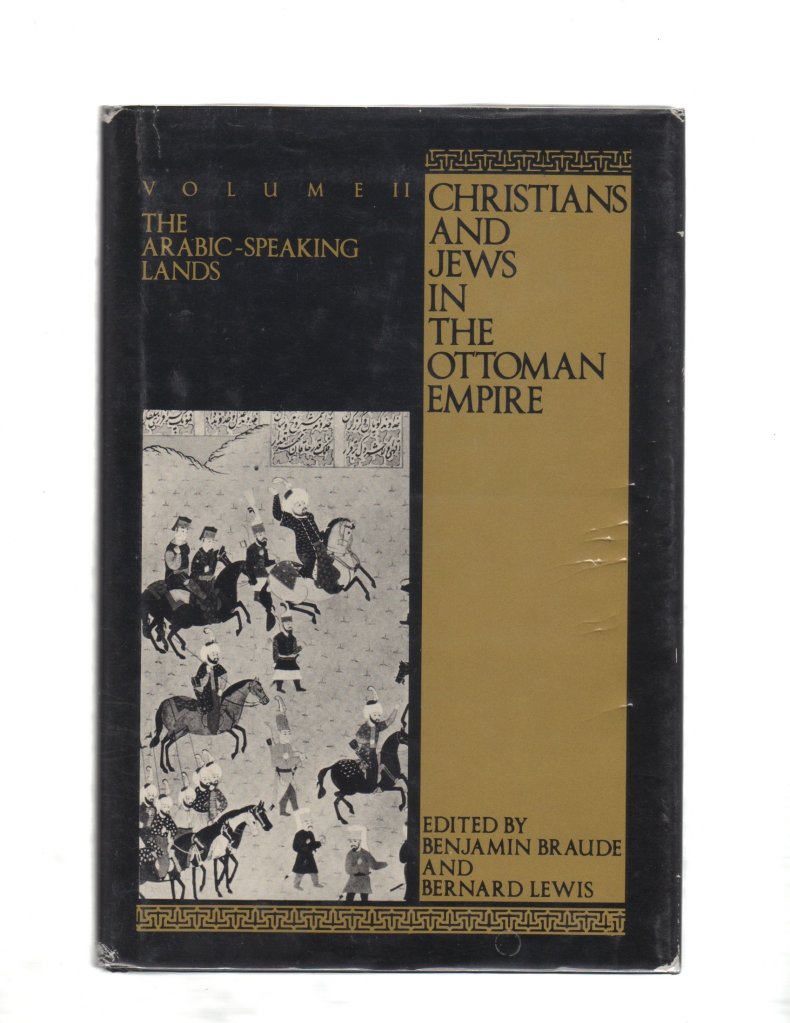
Benjamin Braude and Bernard Lewis, eds., Christians and Jews in the Ottoman Empire, 2 vols
Modern Turkey was born out of the Ottoman Empire after WW1. In 1939, Turkey signed a Mutual Aid Pact with France and the United Kingdom, but, avoiding to go directly into combat and fearing the Soviet Union (which had just jointly invaded Poland with Germany), Turkey along with the rest of the Balkan Entente (Romania, Yugoslavia, Greece, and Turkey) declared neutrality when France was invaded in 1940. In Jun 1941, as the German forces entered the Balkan Peninsula, Turkey and Germany signed a non-aggression pact; this pact gave Turkey the security it sought, while giving Germany the comfort of a safe flank as it planned to turn against the Soviet Union. Despite Turkish neutrality, the country did suffer some casualties during the war. On 3 Nov 1941, for example, Turkish schooner Kaynakdere was sunk by Soviet submarine ShCh-214 in the Black Sea as the Turkish schooner ventured near ground sheld by German troops (the Soviet submarine captain suspected that the schooner was smuggling in supplies for the Germans); Soviet submarines would sink several more Turkish vessels during the war. Turkey would suffer losses at the hands of the Axis as well, such as the loss of merchant ship Antares to Italian submarine Alagi in Jul 1942. Meanwhile, the Western Allies actively courted Turkey. In Dec 1941, days prior to the Pearl Harbor attack that brought the United States into the war, Franklin Roosevelt announced that Turkey was eligible to receive Lend-Lease aid. As the tide turned against Germany, Turkey leaned more and more toward the Allied side. Turkey halted the export of chromite, a key ingredient in the manufacture of stainless steel, to Germany in Apr 1944. On 2 Aug 1944, Turkey severed diplomatic relations with Germany. In Feb 1945, Turkey allowed itself to be courted by the Allies by attending the inaugural meeting of the United Nations, leading to a declaration of war on Germany on 23 Feb 1945. Turkish troops were not sent into combat, however.
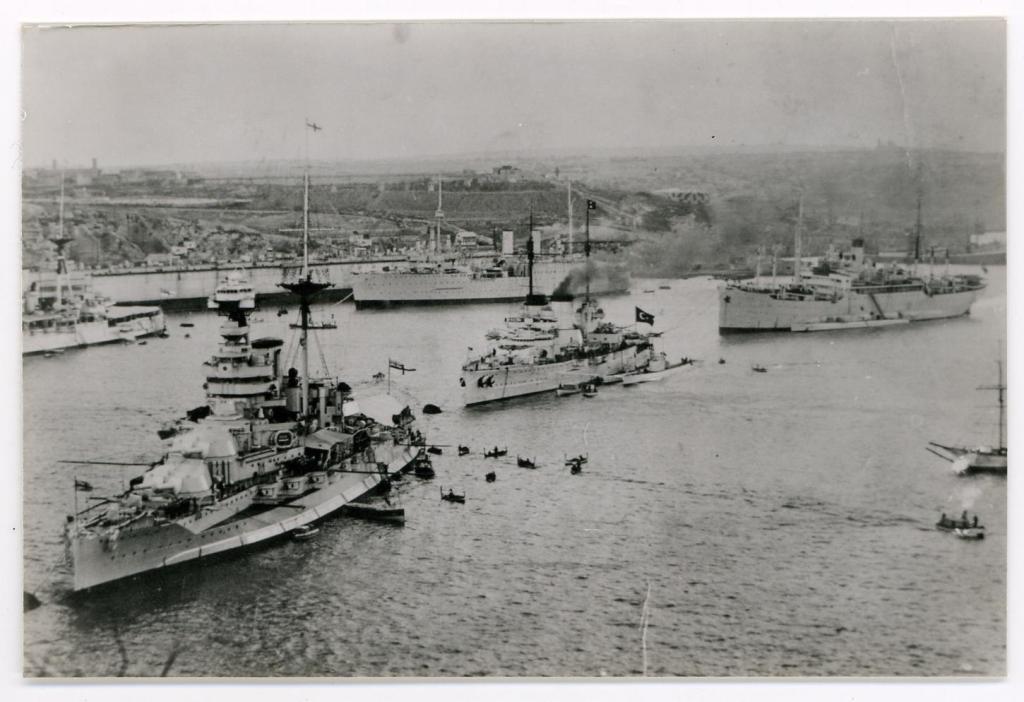
The Turkish fleet in Malta, in 1936, prior to World War II. The Navy was the weakest of the three armed services at the outbreak of war.
The Turkish Navy was the weakest of the services. It consisted of the outdated battle cruiser Yavuz (ex-Goeben), 4 destroyers, 5-6 submarines, 2 light cruisers, 3 mine-sweepers, 2 gunboats, 3 motor torpedo boats, 4 minelayers and a surveying vessel. The personnel strength was approximately 800 officers and 4,000 men. The Navy lacked all modern appliances for defending coasts and harbours, and the ships were defenceless against air attacks.
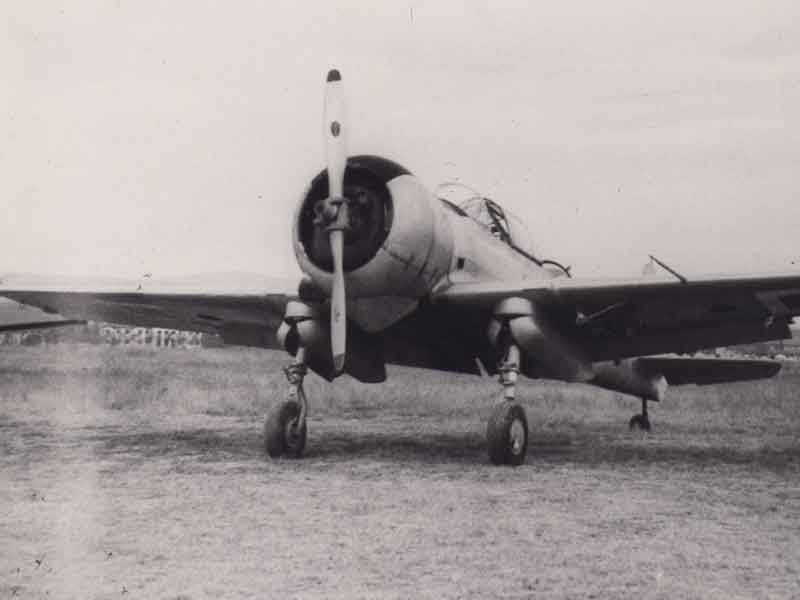
During the Anglo-Turkish Treaty negotiations in September 1939 a military credit agreement amounting to £25 million was agreed upon. A Turkish Ministry of Defence letter to the Turkish General Staff dating 22.03.1940 stated that the Turkish Army was to be increased to 1.3 million effectives forming 14 army corps consisting of 41 infantry and 3 cavalry divisions, 7 fortified positions and one armoured brigade. Yet, the letter stated, “the material resources of the nation were unable to provide for the provisioning and transport of this large number of effectives”.
The puzzle of a mysterious death in the Middle Ages has been hypothesized in terms of contemporary forensic legal and scientific methods. That al-Hasan ibn-‘Ali died in 669 aged just 45 has been forensically analyzed based on written sources that dictate eyewitness accounts of historical events. The report of the contemporaneous poisoning of another individual who resided under the same household as al-Hasan’s and experienced similar, yet non-lethal, symptoms has served as the beginning of the analysis. In light of ancient (medieval) documents and through using mineralogical, medical, and chemical facts, it has been hypothesized that mineral calomel (mercury(I) chloride, Hg2Cl2) from a certain region in the Byzantine Empire (present-day western Turkey) was the substance primarily responsible for the murder of al-Hasan.
Introduction
A mysterious death in the Middle Ages is that of al-Hasan ibn-‘Ali. Born of the Prophet Muhammad’s favorite daughter, Fatimah, al-Hasan was declared as the legitimate successor of his father, ‘Ali ibn-abi-Talib (the last of the caliphs known to Arab historians as “orthodox”),1 in 661.2 Faced by his rival, Mu’awiyah ibn-abi-Sufyan, who had been proclaimed caliph in 660 in Jerusalem,1 al-Hasan abdicated in the same year and reasoned as follows: “I have deemed it right to make peace with him and have pledged allegiance to him, since I considered whatever spares blood as better than whatever causes it to be shed.”3 After living in retirement in al-Madinah (in present-day Saudi Arabia) for eight years,1 al-Hasan died in 669,2 when he was just 45 years of age. The belief that al-Hasan died peacefully has not been ruled out by all the experts on Muslim history. However, in general, Muslim theologians commonly believe that his death was caused by a fatal act of poisoning.
With autopsy information unavailable, historical documents are the only available evidence in order to investigate cases such as al-Hasan’s death scientifically. A few traditions,4 such as the one containing the following quote, mention that when al-Hasan was about to die, he was asked by his younger brother1 al-Husayn to identify his poisoner but refused to do so (as he wanted no innocent person to be falsely accused and killed):
If he/she [the poisoner] is not [i.e., not the one whom I suspect], I would like no innocent person to be killed because of me.
Still, the following tradition addresses two concurrent acts of poisoning, which resulted in two victims: al-Hasan and a survivor.
Ja’dah daughter of al-Ash’ath ibn-Qays al-Kindi poisoned al-Hasan ibn-‘Ali, peace be upon both of them, and poisoned a freedwoman of his; however, the freedwoman of his vomited the poison while al-Hasan kept it in his stomach. Then he was wrecked by it and died.
This tradition says that a freedwoman of al-Hasan who had also been poisoned “vomited the poison” and survived, which means that she could have served as forensic evidence for the murder of al-Hasan. But are there any historical reports in which the poison is qualitatively described and can lead to a forensic hypothesis for the murder of al-Hasan?
“Gold filings” or mineral calomel?
That al-Hasan was offered a poisoned drink by his wife Ja’dah is reported in both Shiite4 and Sunni sources. Since intoxicating drinks, such as wine, are not allowed in Islamic law, the drink itself must have been a nonalcoholic drink. According to one tradition,4 a yogurt drink was used. One tradition4 describes the poison that was given to al-Hasan as follows: “It has been said that he was given gold filings to drink.” However, how likely is that from a toxicological perspective? Elemental gold is relatively inert, and an important use for it is in dentistry. It dissolves in concentrated hydrochloric acid if a strong oxidizing agent is present (e.g., in a 3:1 mixture of concentrated hydrochloric acid and concentrated nitric acid).6 The hydrochloric acid in the human stomach is neither concentrated nor in the presence of a strong oxidizing agent. What could the true identity of the toxic substance that al-Hasan had ingested in the drink have been if the powdered solid phase of the substance only looked like gold filings? In order to answer this question accurately, it is useful to know the geographic source of the poison.
The tradition referred to in the Introduction, which says that a freedwoman of al-Hasan had also been poisoned, suggests that the plot to poison al-Hasan was because of some harem jealousy. However, Madelung says that al-Hasan’s “pursuit of women was not more covetous than that of most of his class.” It is logically appropriate to ask if the murder of al-Hasan could have had a political motive force behind it. Although al-Hasan abdicated, in the process of surrendering the reign, he stipulated that his rival “should not be entitled to appoint his successor but that there should be an electoral council.”3 Still, when the caliph died in 680,2 he had already “nominated his own son Yazid as his successor”1 and caused homage to be paid to him.2 There are reports, accepted by both Shiite sources and several major Sunni historians, stating that the poisoning of al-Hasan by Ja’dah was at the instigation of the caliph. A very specific report4 says that in order to eliminate al-Hasan, the caliph, whose empire’s capital was Damascus, wrote to the Byzantine emperor and asked him for a poisoned drink, which the emperor, despite refusing at the beginning, sent conditionally. The mention of the conditionality of the emperor’s agreement in this report is consistent with the hostility of Arab–Byzantine relations in 669 (the year al-Hasan died), when Byzantium had an energetic emperor, Constantine IV.
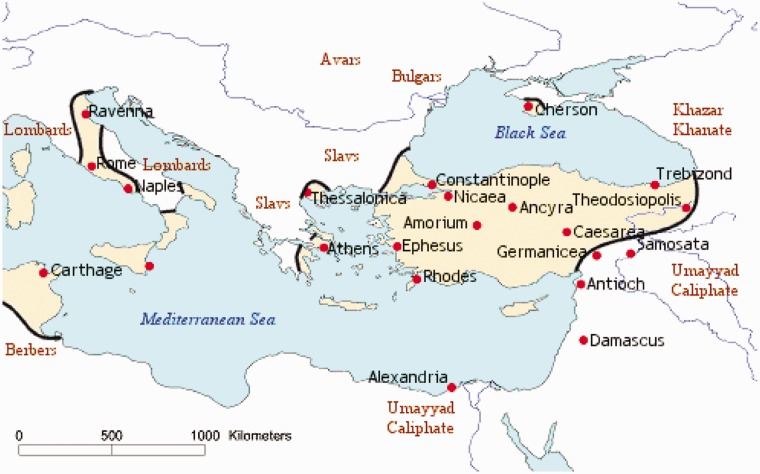
The mainland of the Byzantine Empire in 668 (about one year before al-Hasan’s death) was approximately present-day Turkey (Figure 1). In present-day western Turkey, there are more than 50 mines that contain minerals with deposits of mercury.7 Mercury is isolated from its main ore, cinnabar (mercury(II) sulfide, HgS), and was used in the Mediterranean world for extracting metals by amalgamation as early as 500 BC.6 The element does not have any known biological functions8 and has a long history of toxic effects.6 Mercury(II) chloride (HgCl2), for instance, which was probably first made by Arabic alchemists in the 10th century, was widely used as a violent poison in the Middle Ages.Do the mercury mines in western Turkey contain any mercury species that look like gold?
Fig.1 Map of the Byzantine Empire in 668. (Chris Ambrose, explore Byzantium, http://byzantium.seashell.net.nz/, is credited for the image.)
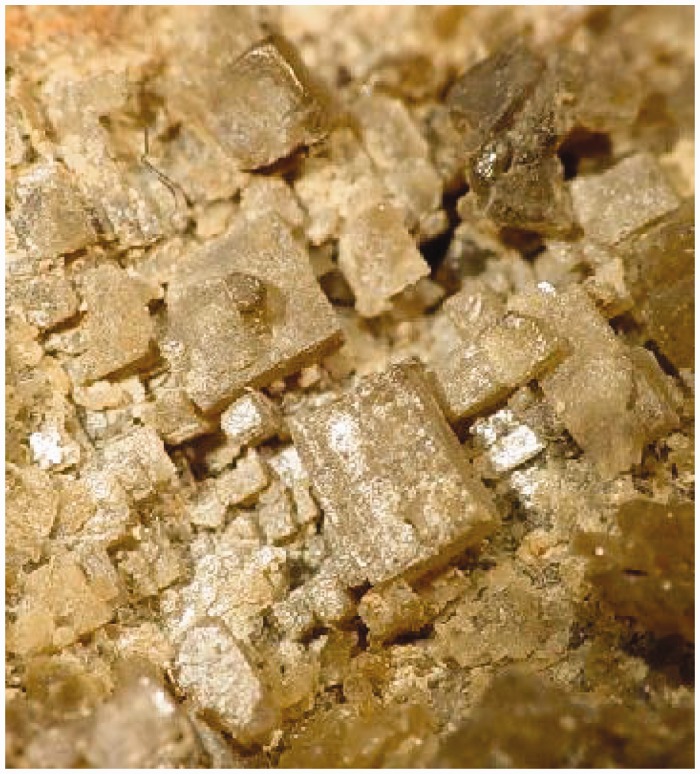
Although abandoned since the 1990s, Türkönü and Haliköy are two important mercury mine locations in Turkey.The Haliköy mine exists in an area made up of metamorphic rocks, including gneiss and schist. Cinnabar and metacinnabar contain mercury and are found in the Haliköy fault. Mine locations also contain deposits of pyrite, marcasite, chalcopyrite, arsenopyrite, quartz, and calcite. The mineral calomel (mercury(I) chloride, Hg2Cl2) is found as a secondary mineral in oxidized zones along with cinnabar, calcite, and limonite. Calomel can present as a yellow gold crust (Figure 2) and forms as tetragonal crystals presenting in a variety of formations, including tabular, prismatic, and pyramidal.
Fig.2 Calomel from Mariposa Mine, Texas, USA. (Rob Lavinsky, The Arkenstone, http://www.iRocks.com, is credited for the image.)
The environmental assessments performed at the mine locations in Turkey have utilized computer programs to aid in analysis of the soil and water samples. The software programs Aquachem and PHREEQCi determined that water samples taken near the Haliköy mine presented with oversaturation with calomel, as well as quartz and cinnabar.
Essential oils are primarily used in food and perfume production. Rose oil, a member of this group, is especially important in the cosmetic industry. Turkey and Bulgaria are the most important producers in the world. The rose flowers have produced for many years in Turkey. Most of them are grown as organic products and processing. In this study, we review the production, cultivation, trade and marketing of rose oil, with a primary focus on Turkey as a major producer. In addition, problems and proposed solutions relating to the rose oil business in Turkey are also presented.
Because of Turkey’s location and climate, many medical and aromatic plants are cultivated or obtained from the wild and many of these are specifically cultivated organically. Essential oils are obtained from plant flowers, leaves, fruit, seeds, stems and roots. There are many essential oil yielding plants grown in Turkey and the rose is among the most important and popular. In this study, we summarize Turkey’s rose oil production and marketing potential within the context of world rose oil market and review problems and present suggestions on how to improve Turkey’s rose oil production and marketing.
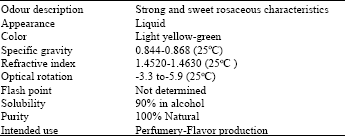
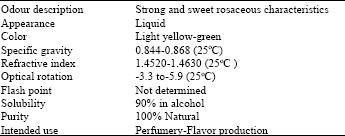
Characteristics and production of rose oil: Turkish Rosa damascena products can be grouped in four categories: Rose Oil, Rose Concrete, Rose Water and Rose Absolute. The physical and chemical characteristic of Turkish rose oil is as follows
produced by processing the rose flower. Roses are gathered in May-June when a 40-day flowering season occurs. Humidity and cloudiness during the season have an effect on the yield and quality of rose oil. The content of essential oil in the rose petals is poor- far below 1%. Because of the volatility of rose oil, content is the highest first thing in the morning when the flowers open; therefore, rose flowers used for distillation are picked manually, daily and before or at sunrise. Roses used for oil production are usually grown without using chemicals. There are two methods for rose oil distillation in Turkey: the traditional but slowly disappearing village-type distillations using long-fired crude copper still known as Imbeks and the modern factory production method using hydro-steam distillations called Kanas. The quality of rose oil produced by these two methods is same.
Characteristic components of rose oil are acyclic monoterpene alcohols, geraniol (up to 75%), citronellol (20%) and nerol (20%) and long-chain hydrocarbons like nonadecane or heneicosane (up to 10%).
An important trace component of rose oil is β-damascenone: Despite its low concentration (0.01%), C13-norisoprenoid has a notable influence on the quality of the oil; together with the structurally related compounds β-damascone and β-ionone, it is enzymatically generated from carotenoids. Similarly, in both saffron and pandanus leaves, the dominant aroma molecules derive from enzymatic degradation of carotenoids.
Characteristic of the fresh flower’s odour is 2-phenyl ethanol, which, though lost during steam distillation, accumulates in the rose water. Rose oil is obtained from the flowers of the oil-bearing rose (Rosa damascena) through water distillation. Thus, rose oil and rose water do not equal each other exactly. Even in the best case, only 10 g of the essential oil are distilled from as much as 100 kg fresh rose flowers (0.01%).
The most important rose oil producer countries are Turkey and Bulgaria. Combined, these two countries produce 80% of total rose oil supply. In 2001, world-wide rose oil production was 4.5 tons and 2-2.5 tons of this were from Turkey. Bulgaria produced 1.5 tons of the world wide total and an additional ton was supplied by Morocco, Iran and Mexico combined.
World rose oil annual consumption is much lower than the combined annual production total; in fact, yearly consumption is between 3.5 and 4.0 tons. This causes rose oil producer companies to carry product (stock) over from year to year. As a result, fluctuations in prices are encountered, with the severity of these fluctuations dependent on how aggressively companies compete for business and find additional customers for their products.
Gulbirlik, the successful Turkish rose market cooperative, determines rose oil pricing for Turkey’s private sector. The export price of rose oil is the main factor in determining the flower price. The flower’s share of total price of rose oil is 55%. It is reported that the total cost for rose flower production is 52.3% for labor, 17.7% for machinery, 12.8% for materials, 11.8% for field rent and 5.5% for draft animal power in Turkey.
Turkey is one of the leading rose flower producing countries, surpassed only by Bulgaria. For over 100 years, roses have mainly been grown in Turkey in Isparta county, in the Southwest part of Anatolia. Roses are also grown in some other parts of Turkey such as Afyon, Burdur and Denizli district. The production of oil rose (Rosa damascena) started in Isparta in 1888 and the first commercial production of rose oil was accomplished in 1892. In addition the first modern plant for rose oil production was build (established) as cooperative in 1953.
Currently, approximately 2-2.5 tons of rose and 4-4.5 tons of rose concrete are annually produced in Turkey. 8.200 families grow oil roses and 0.5-1.0% of total cultivated land in Turkey is used for rose production.
On average, 1 kg of rose oil is extracted from 3 to 5 tons of rose flower leaf. Rose oil is stream distilled from Rosa damascena flowers and rose oils, extracts and derivates are among the most important natural perfume ingredients[5]. These have remarkable diffusive power and are used in many types of perfume bases, blending particularly well with other floras. Rose oil is very expensive oil[3]. In fact, the price of the rose oil has averaged between 3.800 and 4.000 $ kg-1 and its highest price was 4.200 $ kg-1. The short flowering time of the Rosa damascena is a key reason for its high price[10]. There is competition between Turkey and Bulgaria for this market. Earlier maturation in Bulgaria[11,12] leads oil producers to prefer Bulgaria and this affects world rose oil price fluctuations.
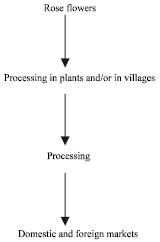
In plants with modern techniques 96.92% of rose flowers is processed[8]. The rose oil produced is mostly exported to foreign countries especially in the EU. This is one of the main reasons for an inadequate cosmetic industry in Turkey (Fig. 1).
Fig. 1: The processing and marketing system of rose oil in Turkey
Export of essential oils and rose oil in the world and Turkey: Based on the 2001 values, the essential oil world-wide export and import markets realized 7.3 and 5.5 billion $, respectively. Difference between these two values were caused by the re-export of different derivatives of essential oils and exports in the last months of any year taking the place of import values in the next year. Sometimes, transportation takes a few months. Consequently, this results in significant differences between the product and monetary amount. It is possible to follow a similar situation between FOB prices in export and CIF prices in import and also in the monetary values of exports and imports. The monetary values of essential oil trade in the world are shown in Table 1.
The EU countries, plus the USA and Japan, are the main importers of essential oils, accounting for 80% of total imports. Turkey’s worldwide essential oil export trade reached 8.6 million $ in 2000, 9 million $ in 2001 and 11.6 million $ in 2002 year. In addition, the import value was 3.3 million $ in 2000 and 2001 and reached 5.6 million $ in 2002[13].
Turkey’s share of the world essential oil trade has been as low as 0.16% with a value of 11.6 million $; but her rose oil export share is a much higher 40-45%.
 Visit Turkey