The puzzle of a mysterious death in the Middle Ages has been hypothesized in terms of contemporary forensic legal and scientific methods. That al-Hasan ibn-‘Ali died in 669 aged just 45 has been forensically analyzed based on written sources that dictate eyewitness accounts of historical events. The report of the contemporaneous poisoning of another individual who resided under the same household as al-Hasan’s and experienced similar, yet non-lethal, symptoms has served as the beginning of the analysis. In light of ancient (medieval) documents and through using mineralogical, medical, and chemical facts, it has been hypothesized that mineral calomel (mercury(I) chloride, Hg2Cl2) from a certain region in the Byzantine Empire (present-day western Turkey) was the substance primarily responsible for the murder of al-Hasan.
Introduction
A mysterious death in the Middle Ages is that of al-Hasan ibn-‘Ali. Born of the Prophet Muhammad’s favorite daughter, Fatimah, al-Hasan was declared as the legitimate successor of his father, ‘Ali ibn-abi-Talib (the last of the caliphs known to Arab historians as “orthodox”),1 in 661.2 Faced by his rival, Mu’awiyah ibn-abi-Sufyan, who had been proclaimed caliph in 660 in Jerusalem,1 al-Hasan abdicated in the same year and reasoned as follows: “I have deemed it right to make peace with him and have pledged allegiance to him, since I considered whatever spares blood as better than whatever causes it to be shed.”3 After living in retirement in al-Madinah (in present-day Saudi Arabia) for eight years,1 al-Hasan died in 669,2 when he was just 45 years of age. The belief that al-Hasan died peacefully has not been ruled out by all the experts on Muslim history. However, in general, Muslim theologians commonly believe that his death was caused by a fatal act of poisoning.
With autopsy information unavailable, historical documents are the only available evidence in order to investigate cases such as al-Hasan’s death scientifically. A few traditions,4 such as the one containing the following quote, mention that when al-Hasan was about to die, he was asked by his younger brother1 al-Husayn to identify his poisoner but refused to do so (as he wanted no innocent person to be falsely accused and killed):
If he/she [the poisoner] is not [i.e., not the one whom I suspect], I would like no innocent person to be killed because of me.
Still, the following tradition addresses two concurrent acts of poisoning, which resulted in two victims: al-Hasan and a survivor.
Ja’dah daughter of al-Ash’ath ibn-Qays al-Kindi poisoned al-Hasan ibn-‘Ali, peace be upon both of them, and poisoned a freedwoman of his; however, the freedwoman of his vomited the poison while al-Hasan kept it in his stomach. Then he was wrecked by it and died.
This tradition says that a freedwoman of al-Hasan who had also been poisoned “vomited the poison” and survived, which means that she could have served as forensic evidence for the murder of al-Hasan. But are there any historical reports in which the poison is qualitatively described and can lead to a forensic hypothesis for the murder of al-Hasan?
“Gold filings” or mineral calomel?
That al-Hasan was offered a poisoned drink by his wife Ja’dah is reported in both Shiite4 and Sunni sources. Since intoxicating drinks, such as wine, are not allowed in Islamic law, the drink itself must have been a nonalcoholic drink. According to one tradition,4 a yogurt drink was used. One tradition4 describes the poison that was given to al-Hasan as follows: “It has been said that he was given gold filings to drink.” However, how likely is that from a toxicological perspective? Elemental gold is relatively inert, and an important use for it is in dentistry. It dissolves in concentrated hydrochloric acid if a strong oxidizing agent is present (e.g., in a 3:1 mixture of concentrated hydrochloric acid and concentrated nitric acid).6 The hydrochloric acid in the human stomach is neither concentrated nor in the presence of a strong oxidizing agent. What could the true identity of the toxic substance that al-Hasan had ingested in the drink have been if the powdered solid phase of the substance only looked like gold filings? In order to answer this question accurately, it is useful to know the geographic source of the poison.
The tradition referred to in the Introduction, which says that a freedwoman of al-Hasan had also been poisoned, suggests that the plot to poison al-Hasan was because of some harem jealousy. However, Madelung says that al-Hasan’s “pursuit of women was not more covetous than that of most of his class.” It is logically appropriate to ask if the murder of al-Hasan could have had a political motive force behind it. Although al-Hasan abdicated, in the process of surrendering the reign, he stipulated that his rival “should not be entitled to appoint his successor but that there should be an electoral council.”3 Still, when the caliph died in 680,2 he had already “nominated his own son Yazid as his successor”1 and caused homage to be paid to him.2 There are reports, accepted by both Shiite sources and several major Sunni historians, stating that the poisoning of al-Hasan by Ja’dah was at the instigation of the caliph. A very specific report4 says that in order to eliminate al-Hasan, the caliph, whose empire’s capital was Damascus, wrote to the Byzantine emperor and asked him for a poisoned drink, which the emperor, despite refusing at the beginning, sent conditionally. The mention of the conditionality of the emperor’s agreement in this report is consistent with the hostility of Arab–Byzantine relations in 669 (the year al-Hasan died), when Byzantium had an energetic emperor, Constantine IV.
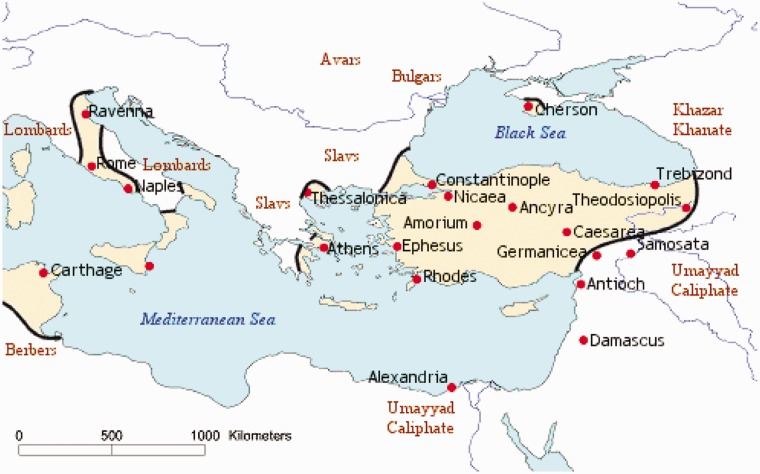
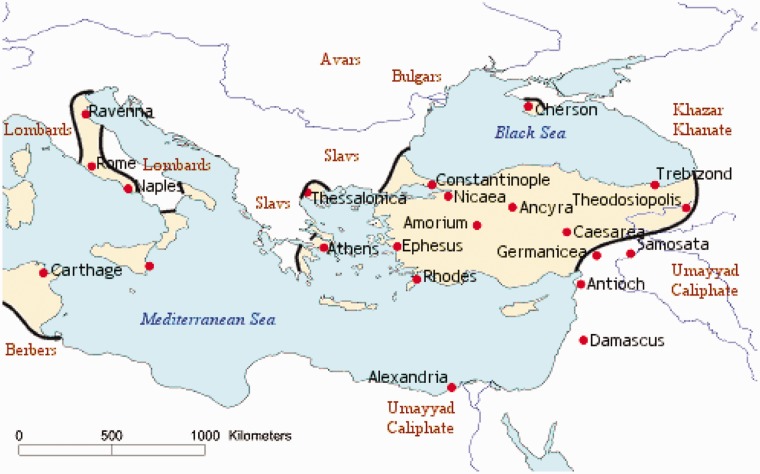
The mainland of the Byzantine Empire in 668 (about one year before al-Hasan’s death) was approximately present-day Turkey (Figure 1). In present-day western Turkey, there are more than 50 mines that contain minerals with deposits of mercury.7 Mercury is isolated from its main ore, cinnabar (mercury(II) sulfide, HgS), and was used in the Mediterranean world for extracting metals by amalgamation as early as 500 BC.6 The element does not have any known biological functions8 and has a long history of toxic effects.6 Mercury(II) chloride (HgCl2), for instance, which was probably first made by Arabic alchemists in the 10th century, was widely used as a violent poison in the Middle Ages.Do the mercury mines in western Turkey contain any mercury species that look like gold?
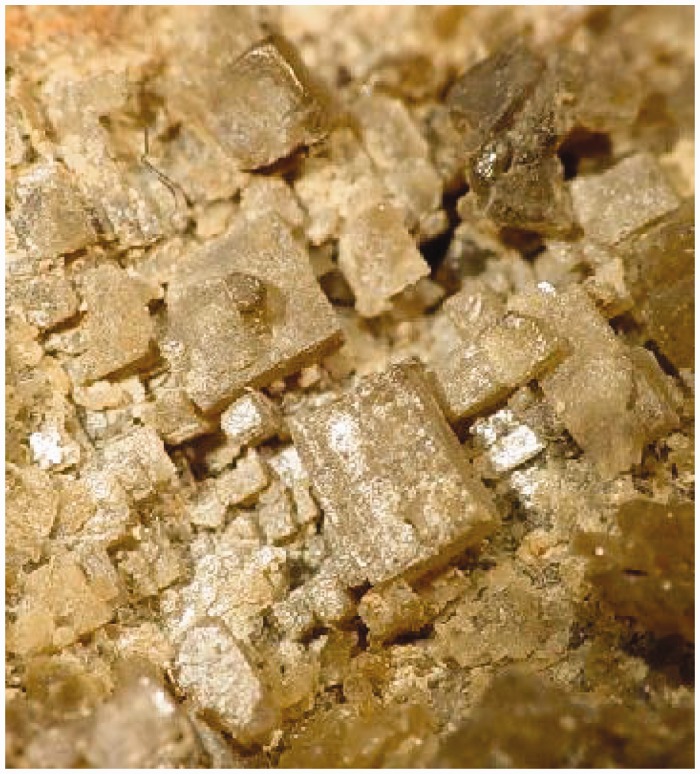
Although abandoned since the 1990s, Türkönü and Haliköy are two important mercury mine locations in Turkey.The Haliköy mine exists in an area made up of metamorphic rocks, including gneiss and schist. Cinnabar and metacinnabar contain mercury and are found in the Haliköy fault. Mine locations also contain deposits of pyrite, marcasite, chalcopyrite, arsenopyrite, quartz, and calcite. The mineral calomel (mercury(I) chloride, Hg2Cl2) is found as a secondary mineral in oxidized zones along with cinnabar, calcite, and limonite. Calomel can present as a yellow gold crust (Figure 2) and forms as tetragonal crystals presenting in a variety of formations, including tabular, prismatic, and pyramidal.
The environmental assessments performed at the mine locations in Turkey have utilized computer programs to aid in analysis of the soil and water samples. The software programs Aquachem and PHREEQCi determined that water samples taken near the Haliköy mine presented with oversaturation with calomel, as well as quartz and cinnabar.

 Visit Turkey