Categories
Arab world Medieval Orient

White sheep

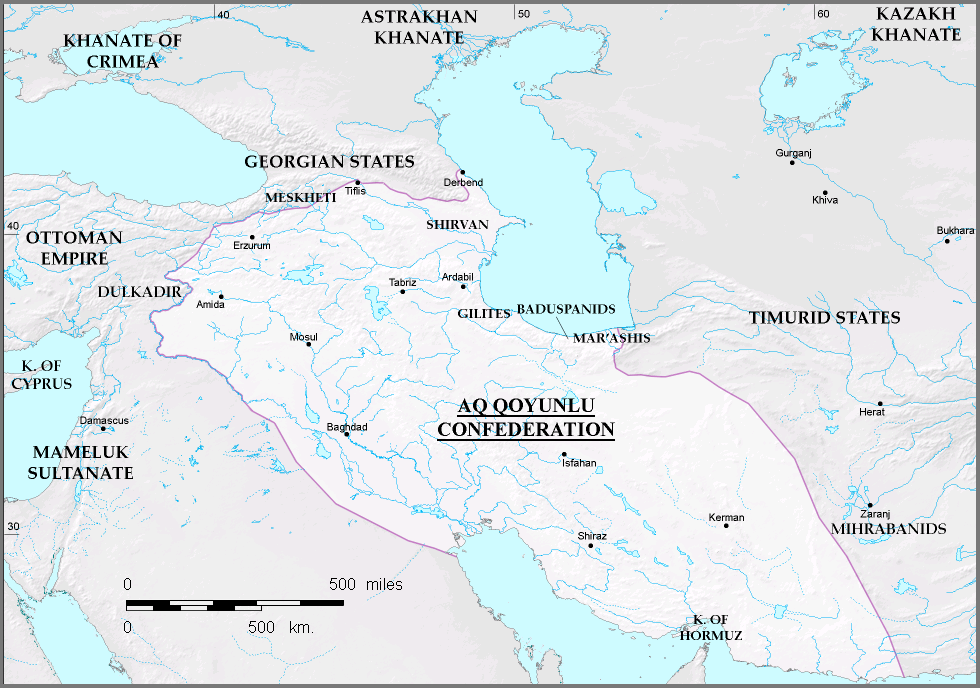
The Ak Koyunlu was one of two rival Turkoman federations, or dynasties (the other being the Kara Koyunlu, or Black Sheep), that ruled parts of Kurdistan during much of the 15th century after the death of the great Mongol conqueror Tamerlane in 1405. Early on, the Sunni Ak Koyunlu had Amed (Di-yarbakir ) as their capital, while the Shia Kara Koyunlu had their center northeast of Lake Van. The Kurds did not play a major role in the armed struggles of the two.
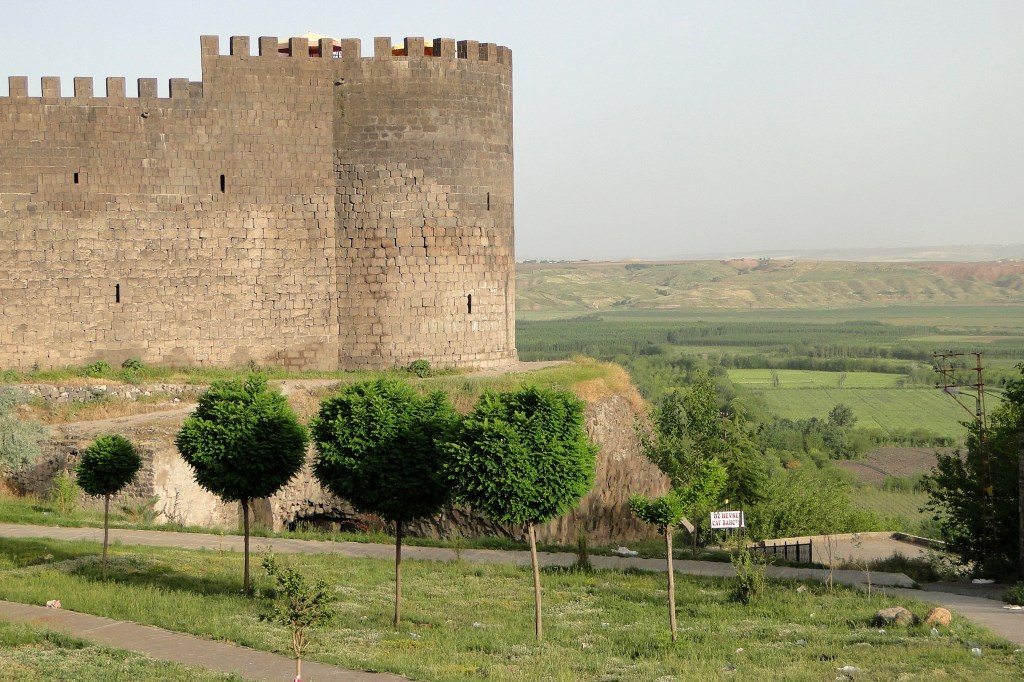
Keçi Burcu, the Goat Tower, a section of the city wall of Diyarbakir photographed by Adam Jones from Kelowna, BC, Canada

In 1467, the able Ak Koyunlu leader Uzun Hasan destroyed his rival Kara Koyunlu federation and eventually extended his power over most of Kurdistan. According to the Sharafnama , Uzun Hasan then “took it upon himself to exterminate the leading families of Kurdistan, especially those who had shown themselves devoted to or subjects of the Kara Koyunlu sultans.” He made his new capital in Tabriz in what is now Iran . After Uzun Hasan’s death, the Iranian Safavid leader Ismail destroyed the Ak Koyunlu in 1502 and proclaimed himself shah.

The origin of the Āq Qoyunlū tribes likewise remains obscure. Certain groups may have migrated from Central Asia to Anatolia in the 5th/11th century under Saljuq leadership and others in the wake of the 7th/13th-century Mongol invasion. By the end of the Il-khanid period in the mid-8th/14th century, the Āq Qoyunlū were migrating between summer pastures (yeylāq) in Armenia around Sinir, east of Bayburt, and winter pastures (qešlāq) around Kiḡi, Palu, and Ergani in Dīār Bakr.

Their political organization was loose. The highest decision-making authority was a council (kengač) of amirs and tribal chiefs (boy ḵānları) who determined military matters and the recurrent issue of succession to the sultanate; the council’s decisions were binding on the sultan. Military and political control of the adjacent villages and towns, necessary for the safety of the pasturage, was maintained by the army, which consisted largely of tribal levies supporting themselves through their own lands and booty. In addition, the sultan maintained a force of paid personal guards (ḵawāṣṣ) who were recruited from several different nomadic and semi-nomadic groups. The revenue of the Āq Qoyunlū came from taxes and dues levied on the sedentary population of Armenians, Kurds, and Arabs, as well as tolls collected along the main trade routes through eastern Anatolia.

Their territory bordered on lands occupied by other Turkman confederation, namely the Qara Qoyunlū area north of Lake Van, the steppe grazed by the Döḡer east of the middle Euphrates around Rohā (Orfa), and the Ḏu’l-Qadr region west of the river. The Ḏu’l-Qadr confederation had submitted to the suzerainty of the Egyptian Mamluks, whose empire thus stretched up to Malaṭya. Further west lay the Qaramān principality and, north of it, the Eretna principality centered on Kayseri and Sīvās, the strongest of the small states formed in Central Anatolia after the collapse of the Il-khanid Empire. To the north of the Āq Qoyunlū were the Christian kingdoms of Trebizond and Georgia.

In the decade 740-50/1339-49 there were frequent armed clashes between the forces of Trebizond and those of Ṭūr-ʿAlī b. Pahlavān, the first Āq Qoyunlū leader mentioned in mutually independent sources. Peace was arranged in 753/1352 through the marriage of Maria Komnene, a sister of the ruler of Trebizond, Alexios III (1349-90), to Ṭūr-ʿAlī’s son Faḵr-al-dīn Quṭlu. Renewed matrimonial links in later generations maintained the peace, and Trebizond was free from Āq Qoyunlū attacks until it fell to the Ottomans in 865/1461. Ṭūr-ʿAlī died some time between 753/1352 and 764/1363. Under his successor Quṭlu, the Āq Qoyunlū began to intervene in the internal conflicts of the Eretna state. They became its nominal vassals in 783/1381 but supported rebellious military chiefs at Arzanǰān (Erzincan) when Qāżī Borhān-al-dīn (also a prominent poet in Turkish) made himself sultan at Sīvās. When Quṭlu died in 791/1389, the leadership first passed to his son Aḥmad, but Aḥmad’s reckless wavering in the struggles between Sīvās and Arzanǰān finally led to his replacement by his brother Qara Yoluz (or Yülük) ʿOṯmān Beg (on this name, see Roemer, “Das turkmenische Intermezzo,” p. 271, n. 26). In 800/1398 Qara ʿOṯmān revolted against Qāżī Borhān-al-dīn and killed him in battle.

Disorders in northern Syria following the deaths of Qāżī Borhān-al-dīn and the Mamluk sultan Barqūq (r. 784-801/1382-99) gave occasion for conflict between the expanding Ottoman power and the westward-moving conqueror Tīmūr. Voluntarily joining Tīmūr in 802/1399-1400, Qara ʿOṯmān led the vanguard in Tīmūr’s campaigns against Sīvās, whose defenders received Ottoman support (802-03/1402), and against the Mamluk dependencies; he also participated in the battle of Ankara (804/1402), which ended in a crushing defeat for the Ottomans. In recompense, Tīmūr granted him the rank of amir, confirmed his leadership of the Āq Qoyunlū confederation, and made the Bayandor family custodians of the

of the fortress city of Āmed (Dīār Bakr) which before 796/1394 had been held by the Artuqids, a clan of the Döḡer tribe. This is apparently how the Āq Qoyunlū first came into possession of Āmed, which was to be their capital for almost seventy years.

After Tīmūr’s death in 807/1405, Qara ʿOṯmān maintained good relations with his successors. By contrast, the Qara Qoyunlū who had been forcibly subdued by Tīmūr, shook off Timurid suzerainty. Under Qara Yūsof, their leader from 792/1390 to 823/1420, they expelled Tīmūr’s grandson Abū Bakr and killed the latter’s father, Mīrānšāh, the governor of Azerbaijan; they then defeated the Jalayerids to gain control of Baghdad and ʿErāq-e ʿArab (Mesopotamia), conquered parts of Georgia, and penetrated deeper into Iran. The Timurid sultan Šāhroḵ was obliged to launch three campaigns (823-24/1420-21, 832/1429, and 838-39/1434-35) to check their expansion and reimpose his suzerainty. Šāhroḵ’s interventions, together with conflicts among the sons of Qara Yūsof, who had died at the time of the first campaign, weakened the position of the Qara Qoyunlū. In the following years they lost large areas in the west to the Āq Qoyunlū.

Between 823/1420 and Qara ʿOṯmān’s death in 839/1435, the Āq Qoyunlū established their authority in Armenia and Dīār Bakr and moved into Dīār Możar and the western part of Dīār Rabīʿa, an expansion which brought them in conflict with the formerly friendly Egyptian Mamluk sultanate. Accordingly, the Qara Qoyunlū allied themselves with Egypt while the Āq Qoyunlū joined with the Timurids, who were then contesting Egyptian hegemony in the Red Sea; Qara ʿOṯmān also provided support for Šāhroḵ’s expeditions into Azerbaijan. During the third campaign, the aging Āq Qoyunlū leader, at Šāhroḵ’s behest, challenged Qara Yūsof’s son Eskandar to battle near Erzurum, but suffered a severe defeat; he was put to death in Ṣafar, 839/August-September, 1435, and his head was sent by Eskandar to the Mamluk sultan Barsbay (r. 825-41/1422-38) in Cairo.

Qara ʿOṯmān was the real founder of the Āq Qoyunlū state. Under his rule, the confederation not only acquired more territory but also gained support through additional tribes drawn to him by his successes. There are indications that the mainly Christian sedentary inhabitants were not totally excluded from the economic, political, and social activities of the Āq Qoyunlū state and that Qara ʿOṯmān had at his command at least a rudimentary bureaucratic apparatus of the Iranian-Islamic type. Even so, the Turkman military elite clearly remained dominant. From 827/1424 onward, in the hope of counteracting the centrifugal tendencies inherent in a tribal confederation and making the principality more cohesive, Qara ʿOṯmān assigned newly conquered territories to his sons rather than to tribal chefs, but this policy did not produce the expected results (Wood, The Aqquyunlu, pp. 66-70).

Qara ʿOṯmān’s death was followed by prolonged succession struggles in which not only the Mamluks, who had gained temporary recognition from some of the Āq Qoyunlū chiefs, but also the Ottomans, intervened. Qara ʿOṯmān’s designated successor, ʿAlī, could not hold his ground against the claims of his brothers, uncles, and cousins, and in 841/1438-39 he abdicated and went into voluntary exile in Egypt. His brother Ḥamza was then the most powerful Āq Qoyunlū chief, but he died in 848/1444 before he had been able to eliminate all rivals. The struggle for leadership resumed between Shaikh Ḥasan, a son of Qara ʿOṯmān, and ʿAlī’s son Jahāngīr. The situation in eastern Anatolia became critical when Šāhroḵ, the Āq Qoyunlū’s protector and the Qara Qoyunlū’s nominal suzerain, died in 850/1447. Succession disputes in Herat gave the Qara Qoyunlū chief, Jahānšāh b. Qara Yūsof, the chance to secede from the Timurid empire and proclaim himself sovereign. With support from certain Āq Qoyunlū tribal chiefs, he set out on a campaign against Jahāngīr in 854/1450 and, after conquering large parts of Armenia, besieged him in Āmed. Jahāngīr surrendered in the spring of 856/1452 and acknowledged Jahānšāh’s suzerainty. The peace treaty was concluded without the knowledge of Jahāngīr’s younger brother Ḥasan, known as Uzun Ḥasan (Long Ḥasan), who considered it a betrayal. Uzun Ḥasan successfully resumed the war with the Qara Qoyunlū and in the autumn of 856/1452 seized Āmed in a bloodless coup while Jahāngīr was away on a military expedition in Kurdistan (Woods, The Aqquyunlu, p. 91). Repudiating the Qara Qoyunlū suzerainty that his brother had recognized, he sent the keys of the fortress as a token of vassaldom to Cairo and received in return a diploma of appointment to the governorship of Āmed. Jahāngīr made several attempts to recapture Āmed; despite reinforcements from Jahānšāh’s army, he was finally defeated in 861/1457.

Source 1): Black Sheep Turkomans, https://en.wikipedia.org/wiki/Kara_Koyunlu

Source 2):Uzun Hassan

Source 3):The Aqquyunlu
Categories
Arab world Orient ottoman period

The Millet

Author:Bruce Masters

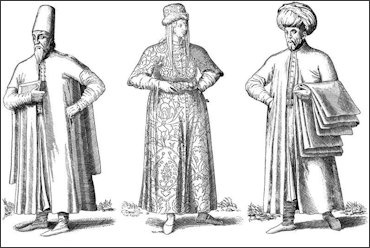
The word millet comes from the Arabic word for nation, milla, but in the Ottoman Empire it came to mean a religious community, specifically, non-Muslim religious minorities represented within the empire by an official political leader. Official Ottoman correspondence dealing with the non-Muslims of the empire in the early 19th century consistently affirmed that nonMuslims were organized into three officially sanctioned millets: Greek Orthodox, headed by the ecumenical patriarch, Armenians, headed by the Armenian patriarch of Istanbul, and Jews, who after 1835 were headed by the hahambaşı in Istanbul. The bureaucrats further asserted that this had been the tradition since the reign of Sultan Mehmed I (r. 1413–21). The millets as constituted in the 19th century were hierarchically organized religious bodies with a decidedly political function. Each was headed by a cleric (patriarch or chief rabbi, known in Ottoman Turkish as the millet başı) who was appointed by the sultan, usually from a list of candidates provided by the community’s leaders, and resident in Istanbul. But beyond that, the millet başı was largely free to order the affairs of his community as long as he remained loyal to the sultan. More importantly, as an officially sanctioned bureaucracy, the millet’s leadership could command the civil forces of empire, such as governors and kadıs, to implement its will over an errant flock.

Many historians have accepted the 19th century bureaucrats’ claim at face value and have asserted that the millet system as it existed in the 19th century had been a part of Ottoman rule since the 15th century. Recent scholarship has shown it was, in fact, a relatively recent Ottoman political innovation, even if its workings were always cloaked in the rhetoric of an ageless tradition.
By the late 18th century, the Ottoman authorities were consistently intervening in disputes within and among the religious communities to support the established religious hierarchies against internal dissent. This was especially true within the Christian communities where there was conflict between Catholic and Orthodox Christian factions that eventually split every Christian millet into two competing bodies. Unlike the Christian churches, the Jews of the empire did not have a pre-existing clerical hierarchy. In the place of patriarchs and bishops, their religious communities functioned autonomously in each of the Ottoman cities they inhabited. Although the Jews were recognized as a separate religious community by both Muslim legal scholars and Ottoman officials, the Jews did not seek formal status as a millet until 1835 when the Ottoman government, in its attempt to standardize the way it dealt with each of the minority religious communities, pushed the Jewish community leaders to name a chief rabbi (hahambaşı) for the empire.

After the start of the Greek War of Independence in 1821, the prestige of the Orthodox ecumenical patriarch in Istanbul plummeted and the special relationship that had existed between the Greek Orthodox Church and the sultan ended. Faced with pressure from the European Catholic powers, notably France and Austria, the Ottomans recognized the Catholics as a millet in 1830. Later, that millet would only include the Armenian Catholic community, as the various other Uniate communities (those Christian sects that recognized the Roman Catholic pope as their spiritual head) pressed for recognition on their own behalf. By the end of the empire, the Ottoman officials recognized 12 separate Christian communities as millets.

During the Tanzimat reform period of the mid19th century, the Ottoman government pushed the millets to reform their internal governance, including school systems directed independently within each community. Reform was usually resisted by the clergy and advanced by the laity as a way of wresting some political authority away from the clerics. In 1863 the Armenians were the first community to write their own constitution governing the internal laws of their millet. This constitution transferred much of the community’s governance to an elected body of laity and clergy. The Orthodox and Jewish communities soon followed, although their experimentation was much less democratic than that of the Armenians. Some historians have seen this trend in local governance among the various religious communities as contributing to the rise of nationalist sentiments among the various Christian communities where religion and nationality could be conflated. The children of the communities were educated separately from Muslims and primarily in the language of their community. They were also taught the separate history of their community and its culture. It is this separate education that many believe inspired these groups to see themselves as separate peoples.

Benjamin Braude and Bernard Lewis, eds., Christians and Jews in the Ottoman Empire, 2 vols
Categories
Arab world Asia Minor

A forensic hypothesis for the mystery of al-Hasan’s death in the 7th century: Mercury(I) chloride intoxication

The puzzle of a mysterious death in the Middle Ages has been hypothesized in terms of contemporary forensic legal and scientific methods. That al-Hasan ibn-‘Ali died in 669 aged just 45 has been forensically analyzed based on written sources that dictate eyewitness accounts of historical events. The report of the contemporaneous poisoning of another individual who resided under the same household as al-Hasan’s and experienced similar, yet non-lethal, symptoms has served as the beginning of the analysis. In light of ancient (medieval) documents and through using mineralogical, medical, and chemical facts, it has been hypothesized that mineral calomel (mercury(I) chloride, Hg2Cl2) from a certain region in the Byzantine Empire (present-day western Turkey) was the substance primarily responsible for the murder of al-Hasan.

Introduction

A mysterious death in the Middle Ages is that of al-Hasan ibn-‘Ali. Born of the Prophet Muhammad’s favorite daughter, Fatimah, al-Hasan was declared as the legitimate successor of his father, ‘Ali ibn-abi-Talib (the last of the caliphs known to Arab historians as “orthodox”),1 in 661.2 Faced by his rival, Mu’awiyah ibn-abi-Sufyan, who had been proclaimed caliph in 660 in Jerusalem,1 al-Hasan abdicated in the same year and reasoned as follows: “I have deemed it right to make peace with him and have pledged allegiance to him, since I considered whatever spares blood as better than whatever causes it to be shed.”3 After living in retirement in al-Madinah (in present-day Saudi Arabia) for eight years,1 al-Hasan died in 669,2 when he was just 45 years of age. The belief that al-Hasan died peacefully has not been ruled out by all the experts on Muslim history. However, in general, Muslim theologians commonly believe that his death was caused by a fatal act of poisoning.

With autopsy information unavailable, historical documents are the only available evidence in order to investigate cases such as al-Hasan’s death scientifically. A few traditions,4 such as the one containing the following quote, mention that when al-Hasan was about to die, he was asked by his younger brother1 al-Husayn to identify his poisoner but refused to do so (as he wanted no innocent person to be falsely accused and killed):

If he/she [the poisoner] is not [i.e., not the one whom I suspect], I would like no innocent person to be killed because of me.

Still, the following tradition addresses two concurrent acts of poisoning, which resulted in two victims: al-Hasan and a survivor.

Ja’dah daughter of al-Ash’ath ibn-Qays al-Kindi poisoned al-Hasan ibn-‘Ali, peace be upon both of them, and poisoned a freedwoman of his; however, the freedwoman of his vomited the poison while al-Hasan kept it in his stomach. Then he was wrecked by it and died.

This tradition says that a freedwoman of al-Hasan who had also been poisoned “vomited the poison” and survived, which means that she could have served as forensic evidence for the murder of al-Hasan. But are there any historical reports in which the poison is qualitatively described and can lead to a forensic hypothesis for the murder of al-Hasan?

“Gold filings” or mineral calomel?

That al-Hasan was offered a poisoned drink by his wife Ja’dah is reported in both Shiite4 and Sunni sources. Since intoxicating drinks, such as wine, are not allowed in Islamic law, the drink itself must have been a nonalcoholic drink. According to one tradition,4 a yogurt drink was used. One tradition4 describes the poison that was given to al-Hasan as follows: “It has been said that he was given gold filings to drink.” However, how likely is that from a toxicological perspective? Elemental gold is relatively inert, and an important use for it is in dentistry. It dissolves in concentrated hydrochloric acid if a strong oxidizing agent is present (e.g., in a 3:1 mixture of concentrated hydrochloric acid and concentrated nitric acid).6 The hydrochloric acid in the human stomach is neither concentrated nor in the presence of a strong oxidizing agent. What could the true identity of the toxic substance that al-Hasan had ingested in the drink have been if the powdered solid phase of the substance only looked like gold filings? In order to answer this question accurately, it is useful to know the geographic source of the poison.

The tradition referred to in the Introduction, which says that a freedwoman of al-Hasan had also been poisoned, suggests that the plot to poison al-Hasan was because of some harem jealousy. However, Madelung says that al-Hasan’s “pursuit of women was not more covetous than that of most of his class.” It is logically appropriate to ask if the murder of al-Hasan could have had a political motive force behind it. Although al-Hasan abdicated, in the process of surrendering the reign, he stipulated that his rival “should not be entitled to appoint his successor but that there should be an electoral council.”3 Still, when the caliph died in 680,2 he had already “nominated his own son Yazid as his successor”1 and caused homage to be paid to him.2 There are reports, accepted by both Shiite sources and several major Sunni historians, stating that the poisoning of al-Hasan by Ja’dah was at the instigation of the caliph. A very specific report4 says that in order to eliminate al-Hasan, the caliph, whose empire’s capital was Damascus, wrote to the Byzantine emperor and asked him for a poisoned drink, which the emperor, despite refusing at the beginning, sent conditionally. The mention of the conditionality of the emperor’s agreement in this report is consistent with the hostility of Arab–Byzantine relations in 669 (the year al-Hasan died), when Byzantium had an energetic emperor, Constantine IV.

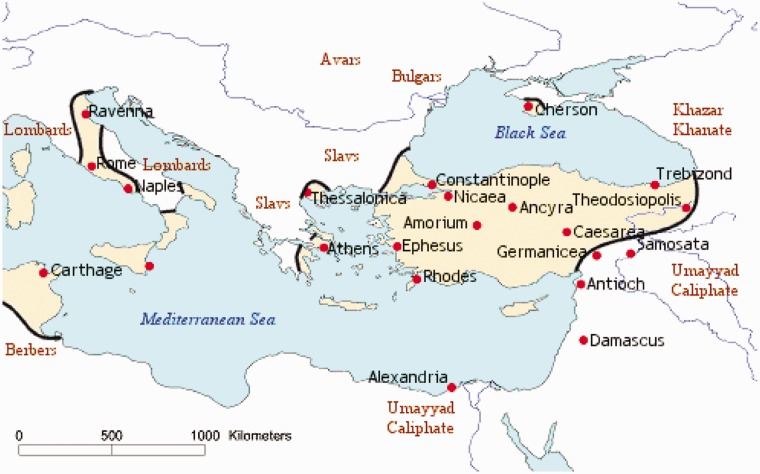
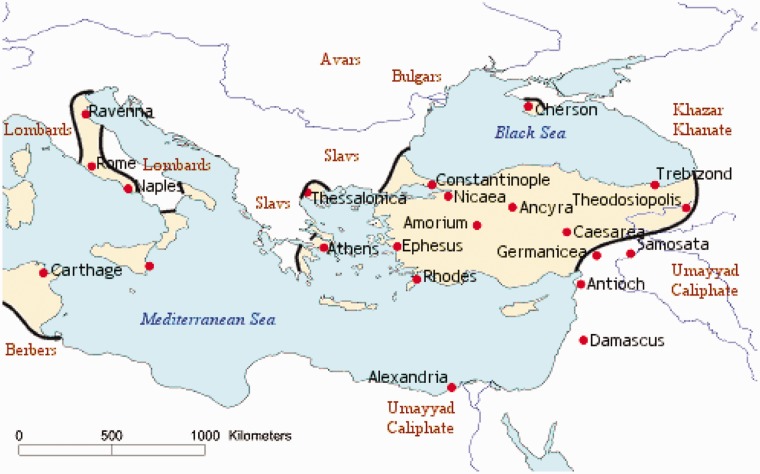
The mainland of the Byzantine Empire in 668 (about one year before al-Hasan’s death) was approximately present-day Turkey (Figure 1). In present-day western Turkey, there are more than 50 mines that contain minerals with deposits of mercury.7 Mercury is isolated from its main ore, cinnabar (mercury(II) sulfide, HgS), and was used in the Mediterranean world for extracting metals by amalgamation as early as 500 BC.6 The element does not have any known biological functions8 and has a long history of toxic effects.6 Mercury(II) chloride (HgCl2), for instance, which was probably first made by Arabic alchemists in the 10th century, was widely used as a violent poison in the Middle Ages.Do the mercury mines in western Turkey contain any mercury species that look like gold?

Fig.1 Map of the Byzantine Empire in 668. (Chris Ambrose, explore Byzantium, http://byzantium.seashell.net.nz/, is credited for the image.)

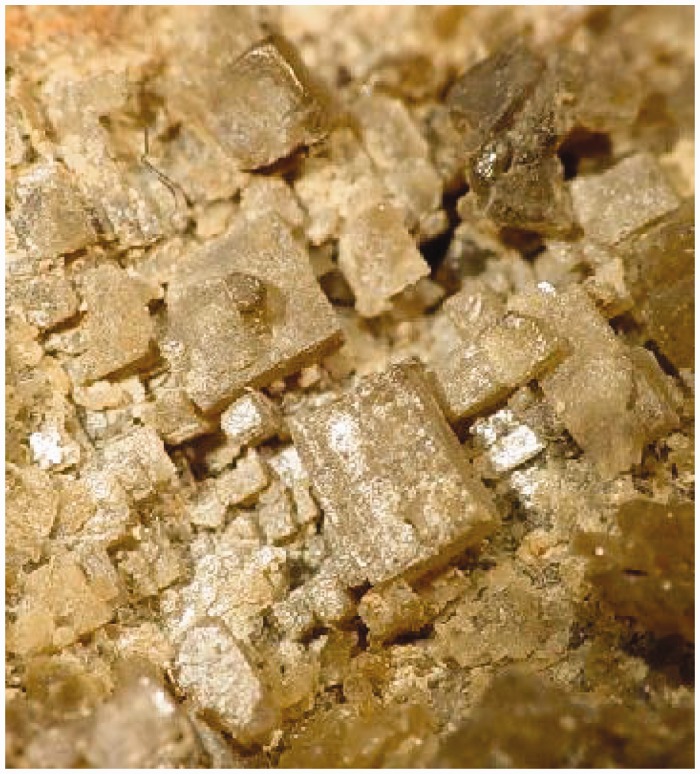
Although abandoned since the 1990s, Türkönü and Haliköy are two important mercury mine locations in Turkey.The Haliköy mine exists in an area made up of metamorphic rocks, including gneiss and schist. Cinnabar and metacinnabar contain mercury and are found in the Haliköy fault. Mine locations also contain deposits of pyrite, marcasite, chalcopyrite, arsenopyrite, quartz, and calcite. The mineral calomel (mercury(I) chloride, Hg2Cl2) is found as a secondary mineral in oxidized zones along with cinnabar, calcite, and limonite. Calomel can present as a yellow gold crust (Figure 2) and forms as tetragonal crystals presenting in a variety of formations, including tabular, prismatic, and pyramidal.

Fig.2 Calomel from Mariposa Mine, Texas, USA. (Rob Lavinsky, The Arkenstone, http://www.iRocks.com, is credited for the image.)

The environmental assessments performed at the mine locations in Turkey have utilized computer programs to aid in analysis of the soil and water samples. The software programs Aquachem and PHREEQCi determined that water samples taken near the Haliköy mine presented with oversaturation with calomel, as well as quartz and cinnabar.

The puzzle of a mysterious death in the Middle Ages has been hypothesized in terms of contemporary forensic legal and scientific methods

Design a site like this with WordPress.com
Get started