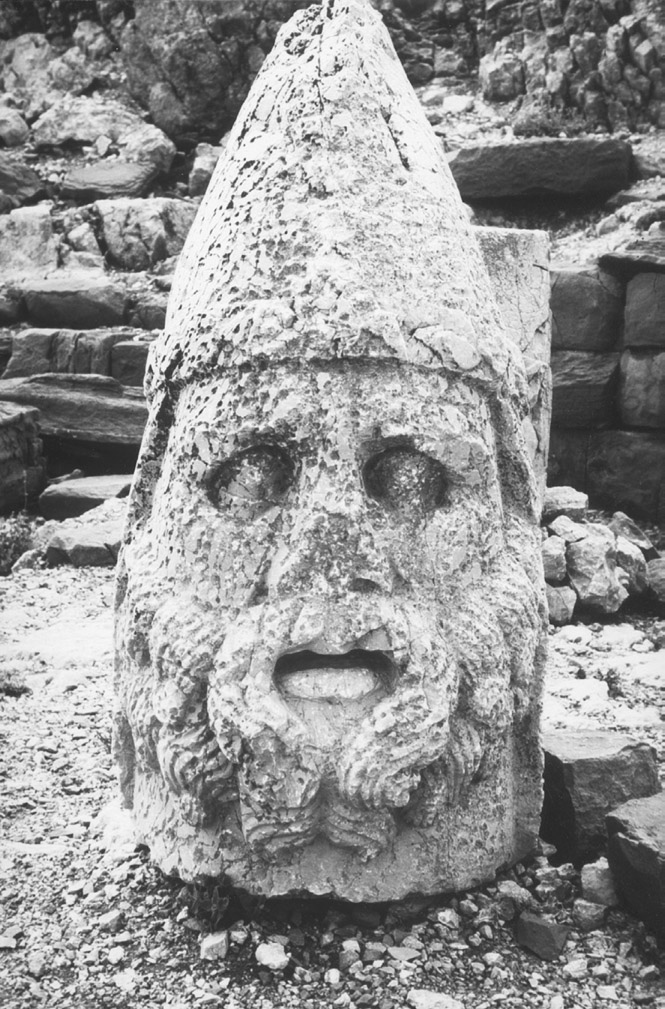
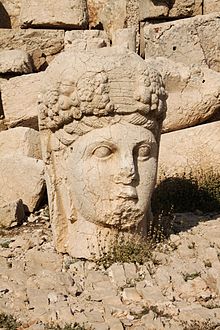
Gods of Commagene
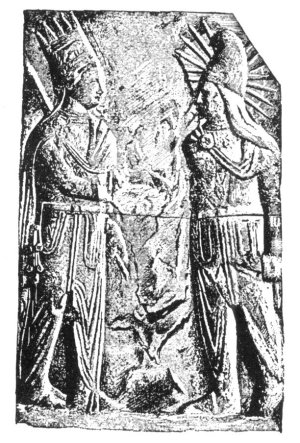
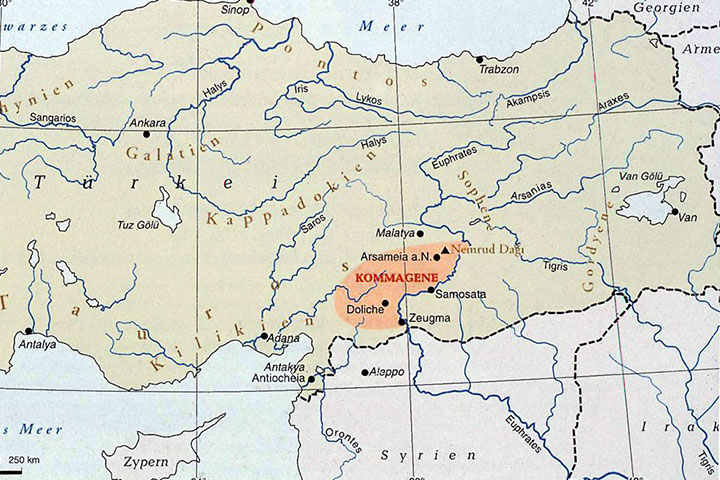
COMMAGENE, the portion of southwestern Asia Minor (modern Turkey) bordered on the east by the Euphrates river, on the west by the Taurus mountains, and on the south by the plains of northern Syria. It was part of the Achaemenid empire and its successor kingdoms and did not achieve status as an independent kingdom until the mid-2nd century B.C.E. Commagene is unique in that indigenous documentation is more extensive than the notices in Greek and Roman sources; nevertheless, that documentation, which consists of official inscriptions in Greek, is skewed: The royal monuments of Antiochus I (ca. 69-30s b.c.e.) predominate, and the inscriptions (identified here by letters, following Wagner, 1983; and Waldmann) reflect his claims for himself and his dynasty.
Commagene controlled Euphrates crossings from Mesopotamia and was thus the favored invasion route for Persian troops moving west (Cicero, Ad Familiares 8.10.1; Strabo, 16.746, 749; Appian, Syriaca 48; Dio Cassius, 49.13; Pliny, Naturalis Historia 5.86). The kingdom became wealthy from trade and agriculture, particularly on the fertile lands around the capital, Samosata (Strabo, 16.749; cf. 12.535 on fruit trees). Although the means by which the rulers of Commagene developed their land economically are not entirely clear, the existence of great wealth is obvious from the array of royal monuments, the number of festivals celebrated throughout the kingdom, invaders’ expectations of booty (Plutarch, Antony 34), and contemporary notices of royal wealth (Tacitus, Annales 2.81 ).
Political history. Under Achaemenid rule Commagene was administered by a minor official, stationed at Samosata or a similar site and responsible for protecting the Euphrates crossings. Antiochus claimed to be descended from Achaemenid royalty through Orontes, the noted satrap of Armenia in the 4th century b.c.e. (e.g.. Plutarch, Artoxerxes 27); this claim suggests that in the Achaemenid period Commagene may have been part of the satrapy of Armenia and that intermarriage among Persian and Persianized nobility was common in the region. During the Hellenistic period Commagene was part of the Seleucid empire and was at times subject to the nominally Seleucid dynasts of Armenia. Antiochus’ royal inscriptions at Arsameia on the Euphrates (modern Gerger; inscription G) and Arsameia on the Nymphaios (modern Eski Kahta; inscription A) include references to his ancestor Arsames, “founder” of both cities. This Arsames can be identified with the Arsames whom Polyaenus (4.17) described as an Armenian dynast supporting the rebel Seleucid Antiochus Hierax in the mid-3nd century b.c.e. Arsames fortified Arsameia on the Nymphaios as part of his building of a power base against the legitimate Seleucid king, Seleucus II Callinicus (246-26 b.c.e.).
The history of the kingdom of Commagene begins with the reign of Ptolemaeus, a Seleucid officer who became king in 163 or 162 b.c.e. Despite Antiochus’ grandiose claims, the royal family of Commagene was probably an indigenous and somewhat Hellenized dynasty, the early members of which had been assigned Greek titles in the Seleucid administrative hierarchy (e.g. Ptolemaeus Epistates; Diodorus Siculus, 31.19a). At first Commagene was a third-ranking power, weaker than the former Achaemenid satrapies of Armenia and Cappadocia, which were then in conflict over the region of Sophene (Diodorus Siculus, 31.22). Ptolemaeus took advantage of such strife to establish Commagene as a kingdom, which he immediately enlarged by occupying northern strong points in Melitene, part of Cappadocia. His successor, his son Samus, is known only from coins, on which he is represented in both Seleucid and Persian style, and from his grandson Antiochus’ monuments at Nimrud Dagh (inscription Nfa/Nfb = OGI 396 in part) and Arsameia on the Euphrates (inscription Gf = OGI 402).
The reigns of Mithradates I and Antiochus I are better documented. Commagene was clearly a minor power with a limited range of politic

 Visit Turkey