Categories
ottoman period

Who was Cevdet Abdullah?

(1869–1932)

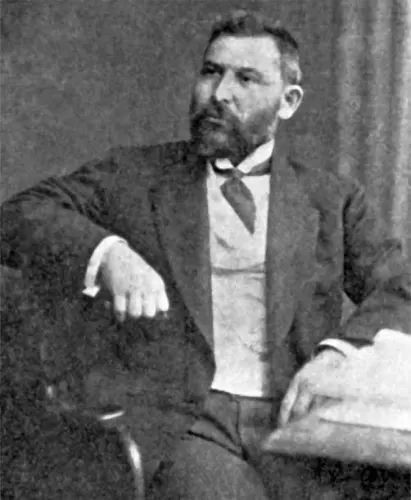
The most outspoken positivist of his generation of Ottoman intellectuals, Cevdet, probably of Kurdish origin, was born in Arapkir, Turkey. He received his education in medicine but became a prolific writer at a relatively young age. He became one of the founding members of the Ottoman Society for Union and Progress (Ittihat ve Terakki Cemiyeti), the most important political movement to arise in the Ottoman Empire in the nineteenth century. Because of his political activities and opposition to Abdulhamid II, he was arrested and sent into exile in Libya. From there, he went to Europe and joined other Ottoman intellectuals living abroad. He began to publish his famous journal Ictihad in 1904, which he continued with some interruptions until his death in 1931. Because of his political activities, he was sentenced again to life in prison in absentia. In 1905 he moved to Egypt, where he lived until 1911.
In addition to Ictihad and his other works on a variety of subjects, Cevdet translated a large number of books from French into Turkish with the goal of making modern European ideas available to the Turkish reader. His translation of Reinhart P. A. dozy’s Essai sur l’histoire de l’islamisme (1897) as Tarih-i islamiyet (1908) led to criticism from many Islamist thinkers because of dozy’s polemical study of the life and personality of the Prophet of Islam. After the turn of the century, he devoted his whole time to writing and translation, and withdrew almost completely from politics. In addition to his modernist publications, he also produced a number of translations from rumi and ‘Umar khayyam. Even though he was a radical modernist and positivist and many of his ideas were adopted by Kemal Atatürk and his followers, he did not take part in the politics of the newly established Turkish Republic. He died in Istanbul in 1932.

Categories
Asia Minor Early Modern Medieval Orient ottoman period

Pastirma

pastrami beer in a glass knife on a wooden table
contributor: Omelnickiy

The Turkish horsemen of Central Asia used to preserve meat by placing slabs of it in pockets on the sides of their saddles, where it would be pressed by their legs as they rode. This pressed meat was the forerunner of today’s pastirma, a term which literally means ‘being pressed’ in Turkish, and is the origin of the Italian pastrami. Pastirma is a kind of cured beef, the most famous being that made in the town of Kayseri in central Turkey.

The 17th century Turkish writer Evliya Çelebi praised the spiced beef pastirma of Kayseri in his Book of Travels, and Kayseri pastirma is still regarded as the finest of all. Good quality pastirma is a delicacy with a wonderful flavour, which may be served in slices as a cold hors d’oeuvre or cooked with eggs, tomatoes and so on. Although pastirma may also be made with mutton or goat’s meat, beef is preferred. Cattle, mainly from the eastern province of Kars, are brought to Kayseri, where they are slaughtered and the meat made into pastirma at factories northwest of the city. The different cuts of meat produce different types of pastirma, 19 varieties from a medium-sized animal and 26 from a large. Extra fine qualities are those made from the fillet and contre-fillet, fine qualities are made from cuts like the shank, leg, tranche and shoulder, and second quality from the leg, brisket, flank, neck and similar cuts. The many tons of pastirma produced in Kayseri is almost all sold for domestic consumption all over Turkey.

Istanbul and Adana are the provinces with the largest consumption. The meat undergoes a series of processes lasting about a month. The freshly slaughtered meat rests at room temperature for 4-8 hours before being divided into joints suitable for pastirma making. These are slashed and salted on one side, stacked, and left for around 24 hours. They are then salted on the other side, stacked and left for a further 24 hours. Then the joints are rinsed in plenty of water to remove the excess salt, and dried in the open air for a period varying between three and ten days, depending on the weather. After some further processing, the meat is hung up to dry again, this time in the shade and spaced out so that the joints do not a touch one another. After 3-6 days, they are covered with a paste of ground spices known as çemen, and left to cure for 10-24 hours in hot weather, and 1-2 days in cold weather. Then the excess çemen is removed, leaving a thin layer, and the joints dried again. Finally the pastirma is ready for the table. The çemen paste covering the slabs of pastirma is both an important factor in the flavour, and protects the meat from drying and spoiling by contact with the air, which would cause the fat in the pastirma to oxidise and give a bitter flavour. ÿemen is composed of crushed classical fenugreek seeds, garlic and chilli pepper mixed to a paste with a little water. Çemen paste is also sold separately as a savoury paste for spreading on bread. When buying pastirma, note that the redder the colour, the fresher the pastirma. Over time it takes on a browner tone, and becomes firmer in texture. Good quality pastirma, whether fresh or mature, is delicious, and it is only a matter of taste which you prefer. Gourmets do not approve of pastirma sliced by machine but insist on the thin slices being cut by hand with a sharp meat knife. They also reject ready cut slices of pastirma as sold packaged in some delicatessens and supermarkets. Pastirma is delicious with fresh crusty bread, grilled lightly over charcoal, fried in butter with eggs or in layered pastry börek. Bean stew with pieces of pastirma is another popular dish in Turkey.

Reference: Mustafa Cetinkaya / Skylife

Pastirma

Categories
Arab world Orient ottoman period

The Millet

Author:Bruce Masters

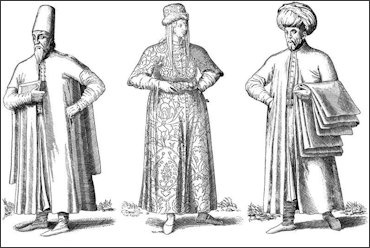
The word millet comes from the Arabic word for nation, milla, but in the Ottoman Empire it came to mean a religious community, specifically, non-Muslim religious minorities represented within the empire by an official political leader. Official Ottoman correspondence dealing with the non-Muslims of the empire in the early 19th century consistently affirmed that nonMuslims were organized into three officially sanctioned millets: Greek Orthodox, headed by the ecumenical patriarch, Armenians, headed by the Armenian patriarch of Istanbul, and Jews, who after 1835 were headed by the hahambaşı in Istanbul. The bureaucrats further asserted that this had been the tradition since the reign of Sultan Mehmed I (r. 1413–21). The millets as constituted in the 19th century were hierarchically organized religious bodies with a decidedly political function. Each was headed by a cleric (patriarch or chief rabbi, known in Ottoman Turkish as the millet başı) who was appointed by the sultan, usually from a list of candidates provided by the community’s leaders, and resident in Istanbul. But beyond that, the millet başı was largely free to order the affairs of his community as long as he remained loyal to the sultan. More importantly, as an officially sanctioned bureaucracy, the millet’s leadership could command the civil forces of empire, such as governors and kadıs, to implement its will over an errant flock.

Many historians have accepted the 19th century bureaucrats’ claim at face value and have asserted that the millet system as it existed in the 19th century had been a part of Ottoman rule since the 15th century. Recent scholarship has shown it was, in fact, a relatively recent Ottoman political innovation, even if its workings were always cloaked in the rhetoric of an ageless tradition.
By the late 18th century, the Ottoman authorities were consistently intervening in disputes within and among the religious communities to support the established religious hierarchies against internal dissent. This was especially true within the Christian communities where there was conflict between Catholic and Orthodox Christian factions that eventually split every Christian millet into two competing bodies. Unlike the Christian churches, the Jews of the empire did not have a pre-existing clerical hierarchy. In the place of patriarchs and bishops, their religious communities functioned autonomously in each of the Ottoman cities they inhabited. Although the Jews were recognized as a separate religious community by both Muslim legal scholars and Ottoman officials, the Jews did not seek formal status as a millet until 1835 when the Ottoman government, in its attempt to standardize the way it dealt with each of the minority religious communities, pushed the Jewish community leaders to name a chief rabbi (hahambaşı) for the empire.

After the start of the Greek War of Independence in 1821, the prestige of the Orthodox ecumenical patriarch in Istanbul plummeted and the special relationship that had existed between the Greek Orthodox Church and the sultan ended. Faced with pressure from the European Catholic powers, notably France and Austria, the Ottomans recognized the Catholics as a millet in 1830. Later, that millet would only include the Armenian Catholic community, as the various other Uniate communities (those Christian sects that recognized the Roman Catholic pope as their spiritual head) pressed for recognition on their own behalf. By the end of the empire, the Ottoman officials recognized 12 separate Christian communities as millets.

During the Tanzimat reform period of the mid19th century, the Ottoman government pushed the millets to reform their internal governance, including school systems directed independently within each community. Reform was usually resisted by the clergy and advanced by the laity as a way of wresting some political authority away from the clerics. In 1863 the Armenians were the first community to write their own constitution governing the internal laws of their millet. This constitution transferred much of the community’s governance to an elected body of laity and clergy. The Orthodox and Jewish communities soon followed, although their experimentation was much less democratic than that of the Armenians. Some historians have seen this trend in local governance among the various religious communities as contributing to the rise of nationalist sentiments among the various Christian communities where religion and nationality could be conflated. The children of the communities were educated separately from Muslims and primarily in the language of their community. They were also taught the separate history of their community and its culture. It is this separate education that many believe inspired these groups to see themselves as separate peoples.

Benjamin Braude and Bernard Lewis, eds., Christians and Jews in the Ottoman Empire, 2 vols
Categories
Early Modern ottoman period

Fatma Aliye

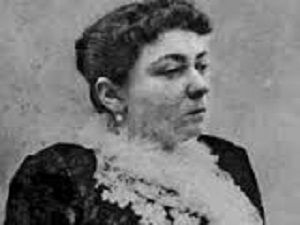
Fatma Aliye was born on 26 October 1862 into a mansion in Istanbul. Her father, Ahmet Cevdet Pasha (1822–1895),was an influential bureaucrat of the Ottoman State, a lawyer and a historian. Her mother was Adviye Rabia Hanım. Fatma had a brother, Ali Sedat, and a sister,Emine Semiye (1864–1944), also a prominent figure in her time, though less so than Fatma.


A Member of the Ottoman Parliament, Fatma Aliye’s father was appointed Governor of Egypt when Fatma was three years old and the family spent the years 1866 to 1868 in Aleppo. When she was thirteen, her father was appointed to another governorship and for six months the family resided in Janina (in the western Ottoman Empire; today Ioannina, Greece).

Fatma Aliye’s early years as the daughter of a traditional Ottoman bureaucrat in the post-Tanzimat period were a mixture of mansion life and the new cultural milieu that accompanied ‘Westernization’ (i.e. political reconstruction through the adoption of ‘Western’ public and legal institutions). Fatma received no formal schooling, since at that time there were no high schools or colleges open to women, but was privately tutored at home until the age of thirteen; her father taught her Arabic, history and philosophy and she also took other private lessons. In 1875,
her father became the Minister of Education. Fatma Aliye, who had now come of age, was not permitted to take lessons with male teachers and ordered to stay away from the selamlık (traditionally the part of the house reserved for men) and move into the harem (the part reserved for women).

In 1878, the family spent nine months in Damascus due to her father’s new position. The following year, at the age of seventeen, Fatma Aliye was married upon her father’s wishes to Captain Mehmet Faik Bey (died 1928), one of the aide-de-camps of Sultan Abdülhamid. It was not a marriage based on love; Aliye’s husband was intellectually far less qualified than she and tried to keep her away from intellectual pursuits—at least for a while. Fatma Aliye gave birth to four girls: Hatice Faik Topuz Muhtar (born 1880); Ayşe Faik Topuz (1884–1967); Nimet Faik Topuz Selen (1900–1972) and Zübeyde İsmet Faik Topuz (born 1901).

In 1885, her husband was posted to the central Anatolian province of Konya for a period of eleven months and Fatma Aliye, who had remained in Istanbul with her children, had the opportunity to return to intellectual pursuits,particularly writing. Later, her husband’s negative attitude to her intellectual life would change and he would even encourage her to publish.
The fact that the Ottoman Empire was ruled by the Shari’a (Islamic law) had an impact not only on religious, but also cultural life.

The dominant ideology of the period aimed at a synthesis between Islam and ‘the West’ and the resulting ‘civilizationalism’ found its way into Fatma Aliye’s views on women and women’s rights. She placed primary importance on the family and regarded women as the driving force of ‘civilization’ via their roles as mothers, emphasizing the need for women’s education,raising the problem of women’s freedom and responsibilities in ‘the family’ and in ‘society,’ and demanding rights for women within these prescribed boundaries. Some of her arguments, calling for sexual equality as well as the preservation of gender differences, reflected widespread currents of nineteenth-century European feminist thought.

Her first translation from French, of George Ohnet’s novel Volonté (Meram in Turkish), was published in 1889. She did not use her own name for the reason that it was then considered inappropriate for a woman to publish and write. In Meram, the translator’s name appeared as “a Lady,” but among intellectual circles it was considered improbable that a woman could have really completed such an impressive translation.


For a long time after, Fatma Aliye employed the pseudonym Mütercime-i Meram (the [female] translator of Volonté), but she published her novel Muhazarat (Useful information, 1892) under her real name. Muhazarat, which came out in a second edition in 1908, was the first novel by a woman in the Ottoman Empire. After its publication,Fatma Aliye’s name began appearing in newspapers and magazines.


For thirteen years (1895–1908), Fatma Aliye wrote the editorial column for the Hanımlara Mahsus Gazete (Newspaper for women). The publication, which came out twice a week, debated women’s issues and provided Turkish women intellectuals (such as Emine Semiye, Fatma Fahrünnisa, Gülistan İsmet, Nigar Osman and Leyla Saz) with a public forum. Aliye’s novels Ra’fet and Udi (The lute player), published in 1898 and 1899 respectively, also dealt with the kinds of subjects discussed in the pages of the Hanımlara Mahsus Gazete, such as women’s entrapment in arranged marriages.


Aliye saw economic independence for women as a solution to this, and many other problems faced by women. Ra’fet and Udi were later translated into French, as was Fatma Aliye’s 1895 book about Muslim women, called Les femmes musulmanes. In a letter (dated 2 April 1895) sent by Nicolas Nicolaides, an editor of ‘L’agence Ottomane’ (a well-known contemporary publisher of works on ‘the Orient’), Aliye was informed that Les femmes musulmanes was being published at the same time by another publisher under another title and writer’s name!

Fatma Aliye’s biography, covering her life until the age of 33, was written by Ahmet Mithat Efendi (a prominent intellectual of the period) and published in 1911 under the title of Fatma Aliye: Bir Osmanlı Kadın Yazarının Doğuşu (Fatma Aliye: the birth of an Ottoman woman writer). Aliye herself co-authored Hayal ve Hakikat (Dream and truth) with Ahmet Mithat Efendi in 1894.

Following her interest in philosophy, Aliye wrote Teracim-i Ahval-i Felasife (Biographies of philosophers,
1900), in which she criticized ‘Western’ writers for their lack of knowledge regarding ‘Eastern’ societies, Muslim women and Islam. In a similar vein, she contributed to written debates with orientalists (such as the writer Emile Julyar) in articles published in French newspapers and wrote Nisvan-ı Islam (Women of Islam, 1896;
translated into French and Arabic) and Taaddüd-i Zevcat’a Zeyl (Polygamy—an appendix, 1899).


Further research by Aliye, published under the title “Ünlü İslam Kadınları” (Famous Muslim women, 1895), aimed to provide readers with examples of publicly active and intellectual ‘Eastern’ women performing socially valued roles. She demanded to know how women could remain so unaware of their own history (a critical issue for women abroad, as well as in Turkey). As a distinguished writer, she won international prestige, appearing in biographies of women writers, having her work exhibited at the library of the World’s Columbian Exposition (Chicago, August 1893) and cited in the catalogue of the Women’s Library at the same World Fair.
Seven years later, she was invited to another exhibition in Paris, but could not accept.

Fatma Aliye is also known as the founder of the first women’s association in the Ottoman Empire, the Cemiyet-i İmdadiye (Charity Society), established after the Greek war of 1897, in order to provide bereaved wives and children, as well as war veterans with material assistance. In recognition of her efforts she received a medal from Sultan Abdülhamid in 1899. She also worked for other charity societies: the Osmanlı Hilal-i Ahmer (Ottoman Red Crescent) and the Müdafaa-i Milliye Osmanlı Kadınlar Heyeti (National Defence Women’s Committee), founded by women following the Tripoli and Balkan Wars of 1911 and 1912.


In order to defend her father and teacher, Ahmet Cevdet Pasha, against political attacks, Fatma Aliye wrote the book Cevdet Paşa ve Zamanı (Cevdet Pasha and his time),published in 1911. Between 1921 and 1929, she traveled to France several times for health reasons and to search for her daughter, Zübeyde İsmet, who had converted to Christianity and left Turkey. In the final years of her life, Aliye’s work did not receive much attention and she suffered increasingly from financial difficulties and poor health. She died on 14 July 1936 in Istanbul.


General neglect of the Ottoman era in Turkish scholarship can be attributed in part to the ideological preferences of the Republican regime, through the decades from the 1920s up until the 1980s. In this latter decade, the number of studies on Ottoman society and Ottoman women began to increase in number and ideological paradigms have since shifted. Fatma Aliye is remembered in Turkish historiography today as a pioneering woman-writer and intellectual.
Serpil Çakır University of Istanbul

SOURCES

(A) Fatma Aliye’s personal archival collection at the Library of Istanbul Municipality. Contains manuscripts, letters, documents and photographs.

For further information see Mübeccel Kızıltan and Tülay Gençtürk, eds. İstanbul Belediye Kitaplığı Fatma Aliye Hanım Evrakı Katoloğu (Istanbul Municipal Library: the catalogued documents of Fatma Aliye Hanım). Istanbul: Istanbul Municipality Publishing, 1993.


(B) Hanımlara Mahsus Gazete (Newspaper for women) (1895–1908).


(C) Fatma Aliye, “Ünlü İslam Kadınları” (Famous Muslim women), Hanımlara Mahsus Gazete (Newspaper for Women), no. 8 (14 September 1895): 3–4 and no. 9 (18 September 1895):
2–3

Categories
ottoman period

Murad II

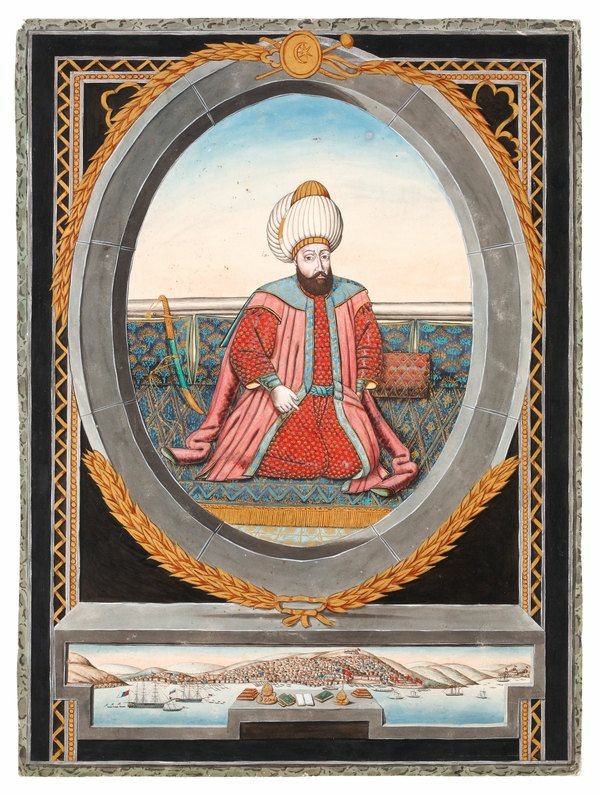
(b. 1404–d. 1451) (r. 1421–1444; 1446–1451) Ottoman sultan The son of Mehmed I (r. 1413–21) and one of his concubines, Murad was born in June 1404 in Amasya. At the beginning of his reign he had to deal with two pretenders to the throne (“False” Mustafa, that is, his uncle, and his own younger brother Prince Mustafa) supported by the Byzantine Empire and Venice. He also had to confront the Anatolian emirates of Germiyan, Karaman, Menteşe, and Isfendiyaroğulları, which all rejected Ottoman suzerainty and occupied Ottoman territories. The most dangerous threat, however, came from European crusaders led by the Hungarians who in the winter of 1443–44, in response to Ottoman encroachments in the previous years, invaded Murad’s Balkan lands as far as Sofia, Bulgaria. After he had overcome these threats and concluded treaties with Hungary and Karaman (1444), in a hitherto unprecedented move Murad abdicated in favor of his 12-year-old son Mehmed II (r. 1444–46; 1451–81). However he was soon recalled by his trusted grand vizier Çandarlı Halil Pasha to command the Ottoman troops against the crusaders— who, despite the recently concluded truce, launched a new campaign in the autumn of 1444—and to quell the insurrection of the Janissaries, the sultan’s elite infantry. Eventually Murad assumed the throne for a second time (1446). The crises of 1444–46 were as dangerous as those of the interregnum and civil war of 1402–13, and threatened the very existence of the Ottoman state. Using sheer military force and a variety of political tools (diplomacy, appeasement, vassalage, marriage contracts), Murad not only saved the Ottoman state from possible collapse but during his second reign (1446–51) he also consolidated Ottoman rule in the Balkans and Asia Minor. Murad II left a stable and strong state to his son Mehmed II, who during his second reign (1451–81) transformed it into a major regional empire.

ACCESSION AND POLITICAL TURMOIL

When he was 12 years of age, Murad was sent to Amasya as prince-governor to administer the province of Rum (north-central Turkey). He helped to consolidate his father’s rule after the civil war (1402–13), and fought against the rebel Börklüce Mustafa. With his commanders he also conquered the Black Sea coastal town of Samsun from the Isfendiyaroğulları Turkish emirate. Murad was only 17 when his father died. Mehmed I’s viziers concealed the sultan’s death until Murad arrived in the old capital, Bursa, and was proclaimed sultan (June 1421).
Murad II’s viziers refused to comply with the agreement Mehmed I had made with the Byzantine emperor Manuel II Palaiologos (r. 1391–1425). According to that agreement, upon Mehmed I’s death Murad was to be acknowledged as Mehmed’s successor and was to rule from the capital Edirne in the European part of the empire while his brother Mustafa was to remain in Anatolia. Their younger brothers (Yusuf and Mahmud, aged eight and seven) were to be handed over to Manuel. The emperor was to keep them (along with Mehmed I’s brother Mustafa) in custody in Constantinople and receive an annual sum for their upkeep. Since the viziers refused to hand over princes Yusuf and Mahmud to the Byzantines, Emperor Manuel released from his custody Prince Mustafa (Mehmed’s brother) and Cüneyd (the former emir of Aydın who had rebelled against Mehmed I). “False” Mustafa, as Ottoman chroniclers dubbed Murad II’s uncle, soon defeated Murad II’s troops and captured the Ottoman capital, Edirne, where he proclaimed himself sultan. He also enjoyed the support of the Rumelian frontier lords, including the Evrenosoğulları and Turahanoğulları, who viewed Ottoman centralization attempts in the Balkans as detrimental to their own freedom of action. In January 1422, at the head of his troops (some 12,000 cavalry and 5,000 infantry), Mustafa crossed to Anatolia through the Straits of Gallipoli. However, Murad II’s troops stopped him before he could reach Bursa. Mustafa fled to the Balkans but was apprehended by Murad’s men near Edirne and hanged as an impostor (winter 1422). In view of Murad II’s strengthened position, the marcher-lords of the European provinces also acknowledged him.
Murad II’s troubles were far from over. His 13-yearold younger brother Mustafa, called “Little” Mustafa by Ottoman chroniclers, was used by Byzantium and the Anatolian emirates to challenge Murad’s rule. However, he too was defeated (due to the desertion of his vizier and troops) and executed (February 1423). In the following years Murad II annexed the emirates of Aydın, Menteşe, Germiyan and Teke, thus reconstituting Ottoman rule in southwestern Asia Minor. While Murad was unable to subjugate Karaman, the most powerful Anatolian emirate, he exploited the unexpected death of the Karaman emir, Mehmed Bey (1423), and the ensuing power struggle. Mehmed Bey’s son, Karamanoğlu Ibrahim Bey, surrendered the territories his father had occupied in 1421, including the lands of the former emirate of Hamid west of Karaman.

VENICE, BYZANTIUM, AND HUNGARY

After consolidating his rule in Anatolia, Murad’s primary goal was to reestablish Ottoman rule in the Balkans by forcing the Balkan rulers to accept Ottoman vassalage and by capturing strategically important forts and towns. This, however, led to direct confrontation with Venice and Hungary, two neighboring states with vital interests in the region. Venice’s commercial interests in the Balkans were guarded by the republic’s colonies and port cities that dotted the Balkans’ Adriatic coast from Croatia in the north to Albania and the Morea (the Peloponnese peninsula in southern Greece) in the south. In addition to its bases in the Morea, in 1423 Venice also acquired Salonika from its ruler, the Byzantine despot (lord) of the Morea. Ottoman recovery of Thessaly—a territory in present-day central Greece once conquered by Bayezid I (r. 1389–1402) but ceded to the Byzantines by Prince Süleyman during the civil war of 1402–13—and the conquest of southern Albania by the early 1430s threatened the republic’s commercial bases in the Adriatic. Murad never acknowledged Venice’s possession of Salonika, which had been under Ottoman siege since 1422. The city succumbed to the Ottomans in 1430. Venice tried to block further Ottoman advance in the Balkans by supporting anti-Ottoman forces, whether in Albania or in Anatolia (such as the Karamanids). The republic also concluded treaties with Hungary and Byzantium against the Ottomans, both of which were now more eager than ever to confront the Ottomans.


After his defeat at the hands of the Ottomans at the Battle of Nikopol in 1396, the Hungarian king Sigismund of Luxembourg (r. 1387–1437, Holy Roman Emperor from 1433) developed a new defensive strategy to contain Ottoman expansion. He envisioned a multilayered defense system consisting of a ring of vassal or buffer states between Hungary and the Ottomans; a border defense line that relied on forts along the lower Danube; and a field army that could easily be mobilized. Forcing the Balkan countries such as Serbia, Wallachia, and Bosnia to accept Hungarian overlordship inevitably led to confrontation with the Ottomans who also wanted to make these countries their vassals. Desperate, the Balkan states often changed sides or accepted double vassalage. Serbia is a good example. Its ruler Stephen Lazarević (r. 1389–1427), known as Despot Lazarević by his Byzantine title, tried to be on good terms with Murad II. At the same time, he was Sigismund’s vassal after 1403 and one of Hungary’s greatest landlords after 1411. According to the Hungarian-Serbian Treaty concluded in May 1426 in Tata (present-day northwestern Hungary), Sigismund acknowledged Stephen’s nephew George (Djuradj) Branković as his heir, who would also keep his uncle’s possessions, except for Belgrade and Golubac, key fortresses for Hungary’s defense on the Danube River, which would pass to Sigismund. When Despot Stephen died in June 1427, Sigismund took possession of Belgrade, “the key to Hungary” in contemporary parlance. Golubac’s captain, however, sold his fort to the Ottomans, causing a major gap in the Hungarian defense line. Sigismund tried in vain to capture the fort in late 1428. By 1433, the Ottomans had occupied most of the Serbian lands south of the Morava River. Despite the fact that Despot George Branković married his daughter, Mara, to Sultan Murad in 1435, and sent his two sons as hostages to the Ottoman court, he was considered an unreliable vassal. Taking advantage of the death of Sigismund (1437) and the ensuing collapse of the central authority in Hungary, by 1439 Murad had subjugated Serbia, capturing its capital Smederevo on the Danube. With the capture of Salonika, Golubac, and Smederevo, Murad had reestablished the Balkan possessions of his grandfather, Bayezid I (r. 1389–1402). Although Murad failed to capture Belgrade in 1440, his five-month siege forced Hungary and her allies to act more forcefully against the Ottoman advance. They also were urged to do so by Byzantium and the papacy, which had just concluded their historic agreement regarding the Union of the Catholic and Orthodox Churches (Council of Ferrara-Florence, 1437–39). The Byzantine emperor John VIII Palaiologos (r. 1425–48) signed the accord in 1439 in the hope that his acknowledgement of papal supremacy would result in Western military and financial assistance against the Ottomans. Hungary, which suffered repeated Ottoman raids from 1438, led the anti-Ottoman coalition. The country’s new hero, János (John) Hunyadi, royal governor of the Hungarian province of Transylvania (1441–56) and commander of Belgrade, thwarted several Ottoman raids in the early 1440s, defeating the district governor (sancakbeyi) of Smederevo (1441) and the commander of the Ottoman forces in Europe, the beylerbeyi of Rumelia (September 1442).

ABDICATION AND THE CRUSADE OF VARNA

In October 1443 the Hungarian army led by King Wladislas (r. 1440–44) and Hunyadi invaded the Balkan provinces of the Ottoman Empire as far as Sofia. Although they did not conquer any territory, the campaign forced Murad II to seek peace. Through the mediation of Murad’s Serbian wife Mara and his father-in-law George Branković, the Hungarian-Ottoman Treaty was concluded in the Ottoman capital Edirne on June 12, 1444, and was ratified by the Hungarians on August 15 the same year in Nagyvárad (Oredea, Transylvania). Having concluded a truce with the Hungarians and the Karamanids, who had coordinated their attack on the Ottomans in Asia Minor with the Hungarian invasion, Murad abdicated in favor of his 12-year-old son Mehmed II and left for Bursa (August 1444). However, Hunyadi’s victories prompted the papacy to forge a new anti-Ottoman Christian coalition with the aim of expelling the Ottomans from the Balkans. Despite the Hungarian-Ottoman truce, preparations for the Crusade went on, for the papal legate declared the peace made with the “infidels” void. These were dangerous times for the Ottomans. In Albania, Iskender Bey (known in the West as Skanderbeg), alias Georg Kastriota—a local Christian who had been brought up a Muslim in Murad II’s court and sent back to Albania to represent Ottoman authority there— rose up against the Ottomans in 1443. By spring 1444 the Byzantine despot of the Morea, Constantine, had rebuilt the Hexamilion (six-mile) wall that had defended the Corinth isthmus and thus the Peloponnese against attacks from the north since the early fifth century C.E. In the summer of 1444, the Byzantine emperor released another pretender against Murad and, most dangerously, on September 22, 1444 the crusading army crossed the Ottoman border into the Balkans. At this critical moment, on the insistence of Çandarlı Halil Pasha, Murad was recalled from Bursa and, arriving in Edirne, assumed the command of the Ottoman troops, while his son Mehmed II remained sultan. The Ottomans met the crusading army at Varna on November 10, 1444. Outnumbered by 40,000 to 18,000, the crusaders were defeated; Hungarian king Wladislas died in battle; and Hunyadi, the hero of the Turkish wars, barely escaped with his life. Despot Branković remained neutral throughout the campaign, as the Ottomans had kept their end of the treaty of Edirne by returning Smederevo and all the other forts stipulated in the agreement on August 22.

MURAD’S SECOND REIGN

While the Ottomans were victorious at Varna, the 1444 campaign revealed the vulnerability of the Ottoman state that had been brought back from the brink of extinction just a generation ago. It also revealed the friction between the viziers of Murad II and Mehmed II. Murad’s trusted grand vizier Halil Pasha, the scion of the famous Turkish Çandarlı family that had served the House of Osman since Murad I (r. 1362–89) in the highest positions, wanted to avoid open confrontation with the Ottomans’ European enemies. Mehmed II’s Christian-born viziers belonged to a new cast of Ottoman statesmen who were either recent Muslim converts or recruited through the Ottoman child-levy (devşirme) system and pursued a more belligerent foreign policy. In order to avoid a possible disaster such aggressive policy might cause, Halil Pasha decided to recall Murad for the second time from his retirement in Manisa, using as pretext the 1446 Janissary rebellion in Edirne, which erupted partly because of Mehmed’s debasement of the Ottoman silver coinage in which the Janissaries received their salaries. Upon assuming his throne for the second time, Murad returned to the Balkans. In a swift campaign in 1446, Ottoman troops breached the Hexamilion wall (December 1446). Other Ottoman troops were fighting, with limited results, against Skanderbeg in Albania. Murad achieved his last great victory at the second Battle of Kosovo Polje in Serbia (October 16–18, 1448) against another crusading army, again consisting primarily of Hungarians led by Hunyadi. When he died in 1451, his son Mehmed II, by then 19 years of age, was poised to revenge his humiliation and to assert his authority by pursuing an aggressive foreign policy against his Christian rivals.

Further reading: Caroline Finkel, Osman’s Dream: The Story of the Ottoman Empire, 1300–1923 (New York: Basic Books, 2005); Oskar Halecki, The Crusade of Varna: A Discussion of Controversial Problems (New York: Polish Institute of Arts and Sciences in America, 1943); Joseph Held, Hunyadi: Legend and Reality (Boulder, Co.: East European Monographs, 1985); Colin Imber, ed., The Crusade of Varna, 1443–45 (Aldershot, UK: Ashgate, 2006); Camil Mureşanu, John Hunyadi: Defender of Christendom (Portland, Or.: Center for Romanian Studies, 2001)

Categories
ottoman period

DYNASTIC AND SOCIAL STRIFE

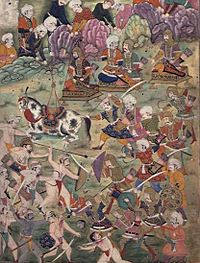
Battle of Ankara (Mughal painting)
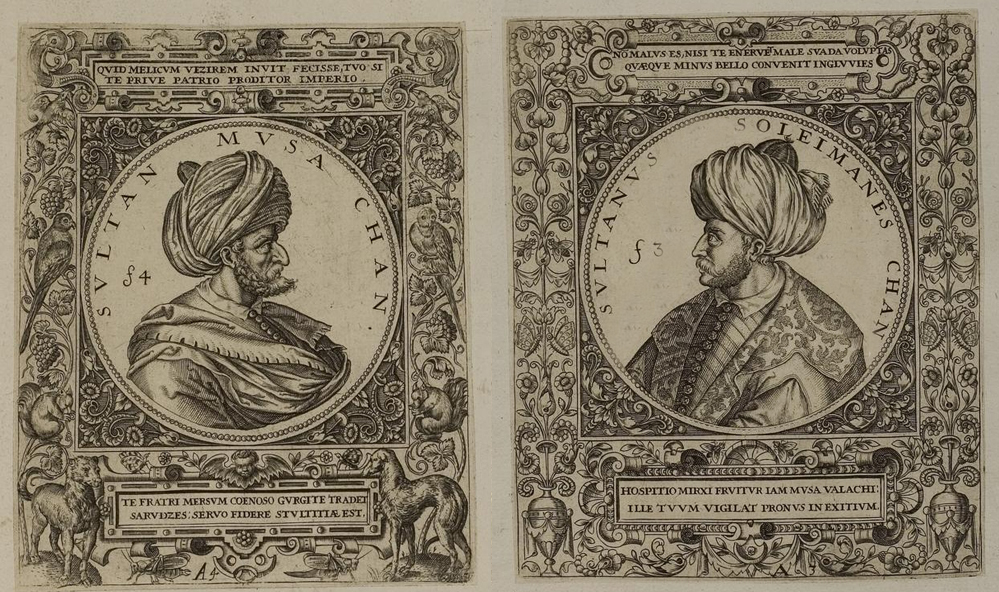
Late 16th-century depiction of Musa and Suleyman, facing each other
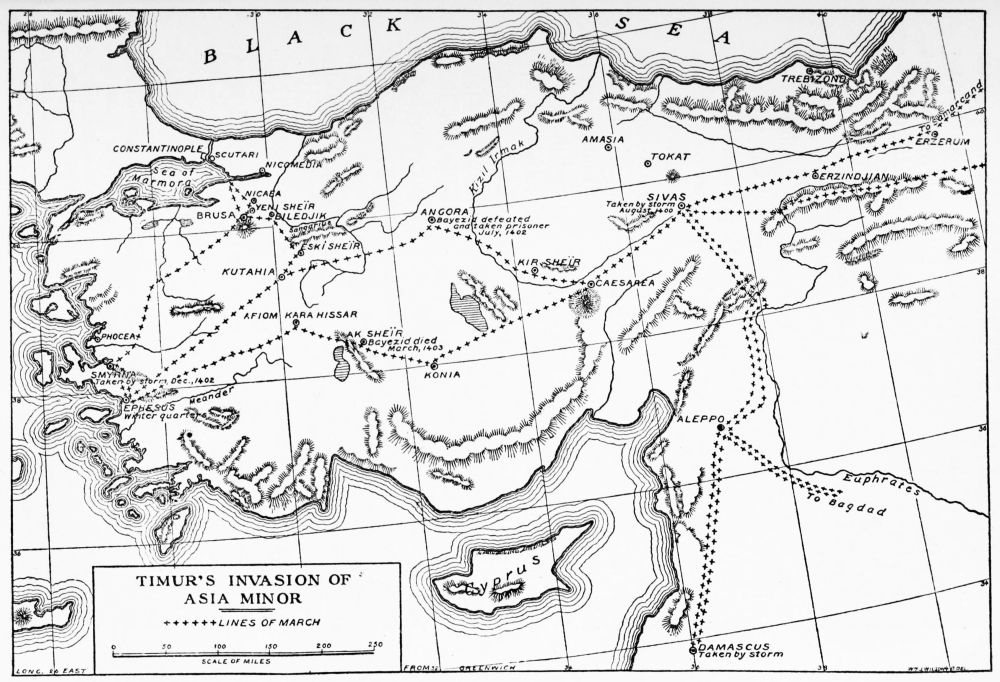
Timur’s invasion of Asia Minor

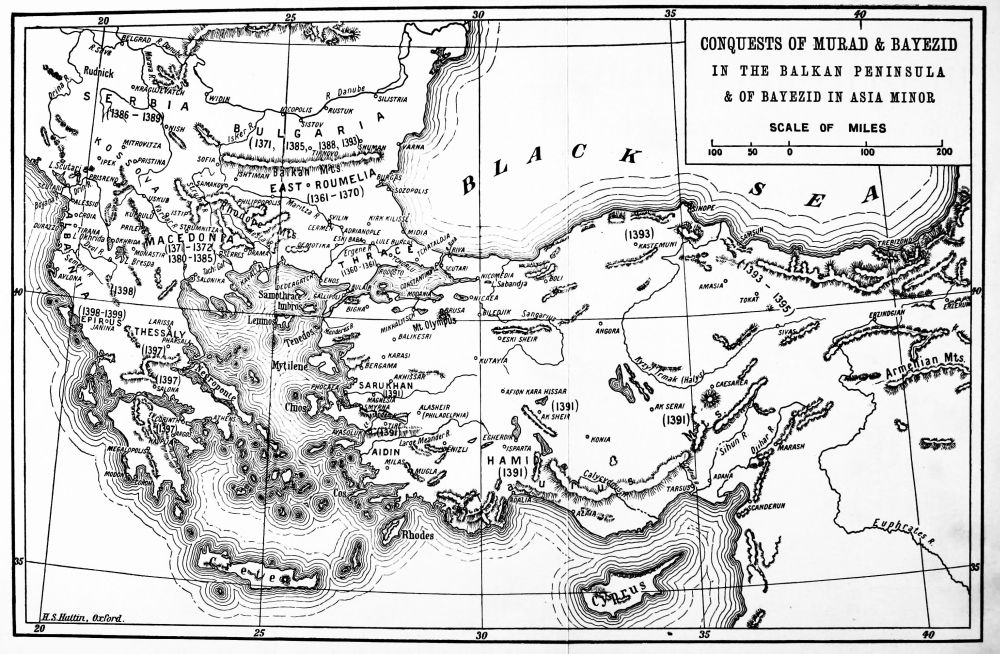
The defeat at Ankara opened a period of political instability combined with social strife. Until 1413 there were sometimes two, sometimes three Ottoman states in conflict with one another. This period is known as the interregnum (fetret devri). Dynastic clashes and social upheaval were to continue within the Ottoman Empire until 1425.

After the conclusion of the treaty and the evacuation of Anatolia by the Mongol army, Suleyman, aiming at sole supremacy over the Ottomans, focused his attention on his two rival brothers. With this end in view, he crossed into Anatolia. It is not clear whom he entrusted with the administration of Rumelia since his vizier, Ali Djandarh, accompanied him. In all likelihood Rumelia was left in the hands of the udj beys. The territory, whose economy had originally been geared to war and conquest, was now confronted with serious problems resulting from the peace, the more so as the number of warriors assembled there had increased with the arrival of those fleeing before the Mongols. However, peaceful relations on the whole were maintained with the neighbouring Christian states, including Hungary which, since the 1360s, had constituted the only real menace to the Ottomans in the Balkans. Furthermore, the Hungarians began to control the production and distribution of metals in central Europe. In Bayazid I’s days King Sigismund of Hungary caused trouble by exerting influence upon several Balkan states. His purpose was to expand his realm from the Black Sea to the Adriatic coast. Nevertheless, his projects regarding the Dalmatian ports caused anxiety to Venice, which avoided an alliance with him against the Turks. Furthermore, during the years following the battle of Ankara, Sigismund was entangled in dynastic strife against his rival, Ladislas of Naples. On the other hand, Ottoman relations with the Venetians, who had occupied some ports in Albania and in Greece, provoked limited military action, the Turks retaliating by harassing Venetian territories and inflicting damage upon Venetian merchants. A new treaty negotiated by Suleyman ended the dispute, the Venetians agreeing to pay annual tribute to him for their new possessions.

In Anatolia Suleyman was first able to eliminate his brother Isa. Early in 1404 he occupied the old capital, Bursa, and the important town of Ankara. He then annexed the Black Sea coast between Herakleia and Samsun, as well as the region of Smyrna, where he obliged Djuneyd to recognise his overlordship. After Timur’s death (1405) the Mongol grasp over Anatolia weakened, and Suleyman was free to turn against his other brother, Mehemmed. The latter, established in a predominantly Turkish milieu, extended his rule from Amasya up to Sivas and consolidated his position by maintaining good relations with the Karamanoglu and with the neighbouring nomadic populations. By marrying the daughter of Dhulkadir, the emir of Elbistan, he obtained access to important military manpower deriving from the tribes of that region. He alone proceeded to assume the title of sultan. A few clashes between the two Ottoman princes came to nothing, and Mehemmed decided to transfer operations to Rumelia.

The instrument of his plans was a fourth brother, Musa, whom he despatched to Rumelia in 1409 with the help of the Isfendiyaroglu. The Byzantine emperor, the Venetians, the Serb ruler and, above all, the Wallachian voivode, Mircea, watching Suleyman’s strong position with anxiety, were ready to support Musa. Mircea received him in his territories and helped him to make preparations against Suleyman. When the latter was obliged to return to Rumelia in 1410, Mehemmed easily became the lord of the whole of Ottoman Anatolia. After a series of military operations, Musa emerged victorious, while Suleyman lost his life in February 1411.

At the beginning Musa, established in Edirne, governed the European provinces as a vassal of his brother, Mehemmed, who had moved to Bursa. When still fighting against Suleyman, Musa repudiated promises made to the Christian lords who had supported him, and revived the spirit of the holy war. Thus he won the support of the military who had long refrained from raiding Christian territories. He soon launched attacks on all directions and besieged Thessalonica and Constantinople.

Alarmed, the Christian lords turned to Mehemmed. Several high Ottoman officials, who had been connected with Suleyman’s administration and, for this reason, had been persecuted by Musa, also joined Mehemmed, and a new struggle for sole supremacy over the Ottoman state began in 1412. For a while, Musa’s position appeared strong, but defections to Mehemmed’s side increased while the Byzantine emperor also offered him his help. Musa was finally defeated near Sofia and killed in 1413. The period of the interregnum was now ended, Mehemmed becoming the sultan of a reunited state and being generally recognised as his father’s legitimate successor. Official Ottoman tradition would never consider Suleyman and Musa as real sultans.

Mehemmed, well aware that his territories had been devastated by the civil wars and that the unity of his state was only fragile, adopted a policy of peace towards the Christians. His intention was facilitated by the hostility prevailing among his main enemies, Venice and Hungary. Having insured peace in Rumelia, the sultan consolidated his position in Anatolia by defeating the Karamanoglu, who, profiting from the civil war, had besieged Bursa. He also put a temporary end to the separatist movement of Djuneyd in Smyrna, whom he sent to Nicopolis as an udj bey of the Danube frontier.

The Christian enemies of the Ottoman state tried to divide it once again, and a new pretender to the Ottoman throne appeared on the scene with the help of the Byzantines, the Wallachians and the Venetians, who now had established contacts with the emir of Karaman. He was Mustafa, who passed into history as the ‘false’ one (duyme) because Mehemmed’s milieu claimed that he was not Bayazid I’s son at all, but simply an impostor. Like Musa, Mustafa, with the help of the voivode Mircea, set off from Wallachia. Djuneyd joined him, abandoning his post at Nikopolis. Soon both were defeated by Mehemmed’s troops near Thessalonica and compelled to take refuge with the Byzantines (1416).

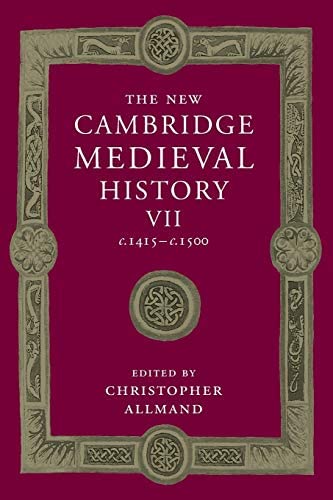
The New Cambridge Medieval History: Volume 7, c.1415–c.1500 (The New Cambridge Medieval History, Series Number 7) by Christopher Allmand

Categories
Early Modern ottoman period

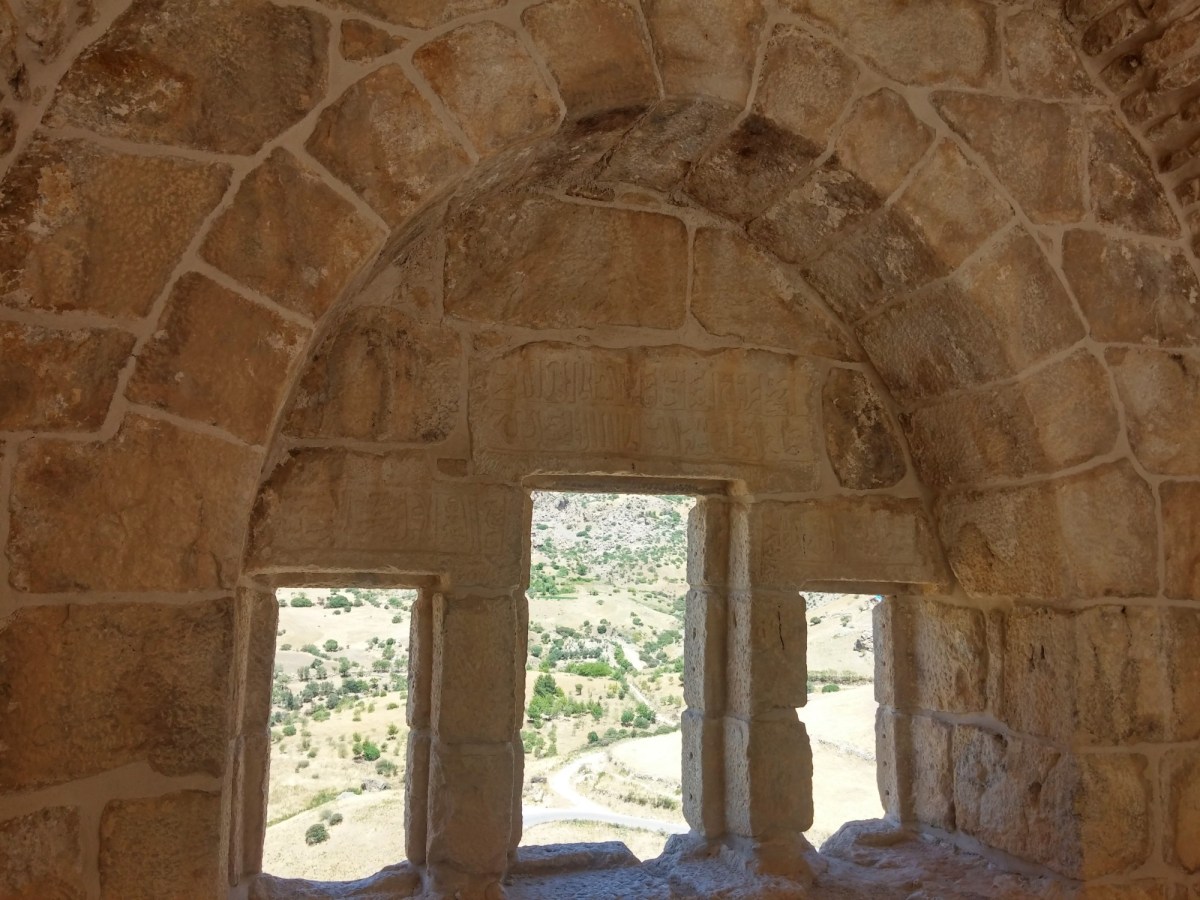
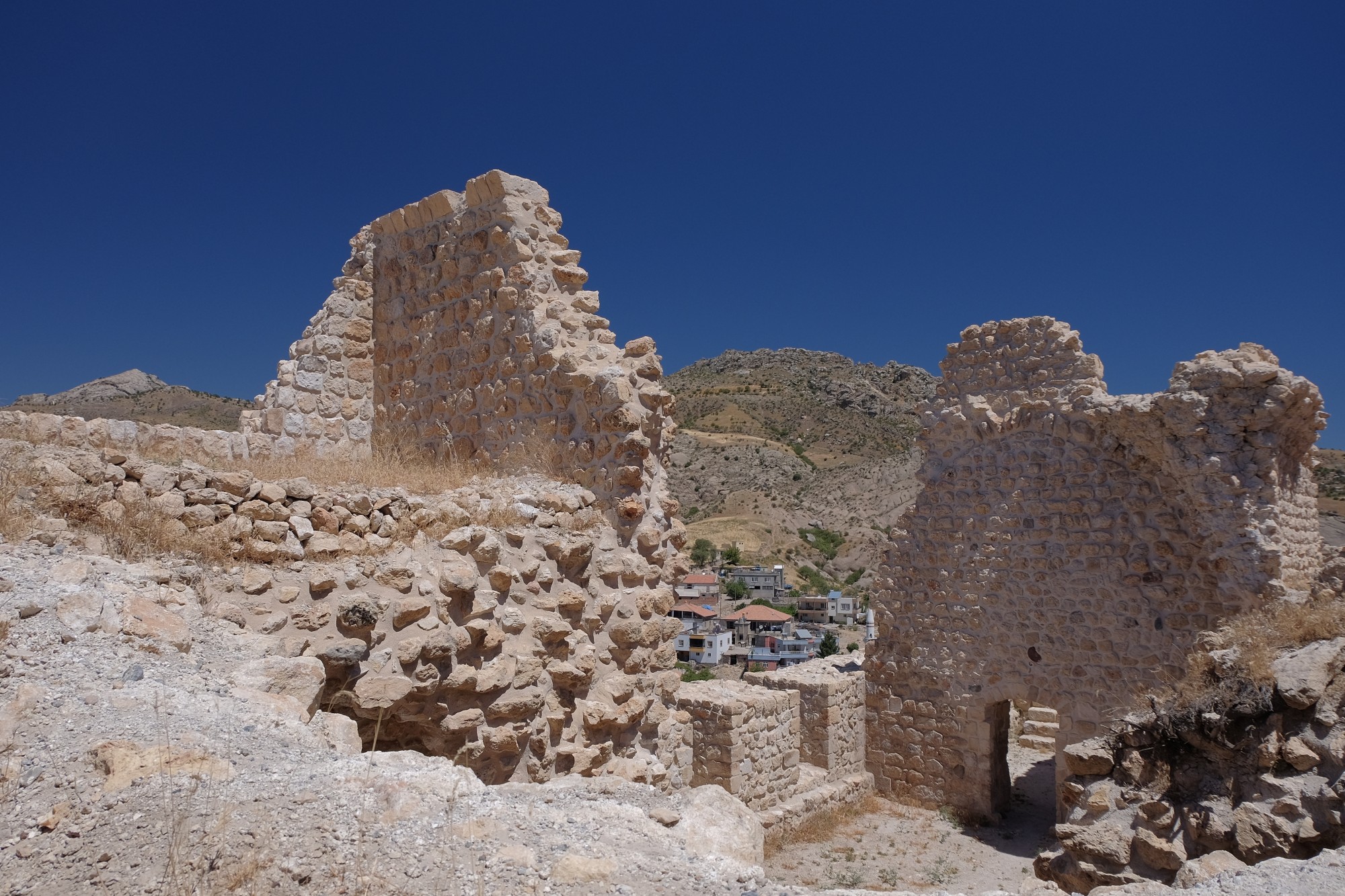
Yeni Kale Fortress in Eski Kahta

Yeni Kale Fortress in Eski Kahta
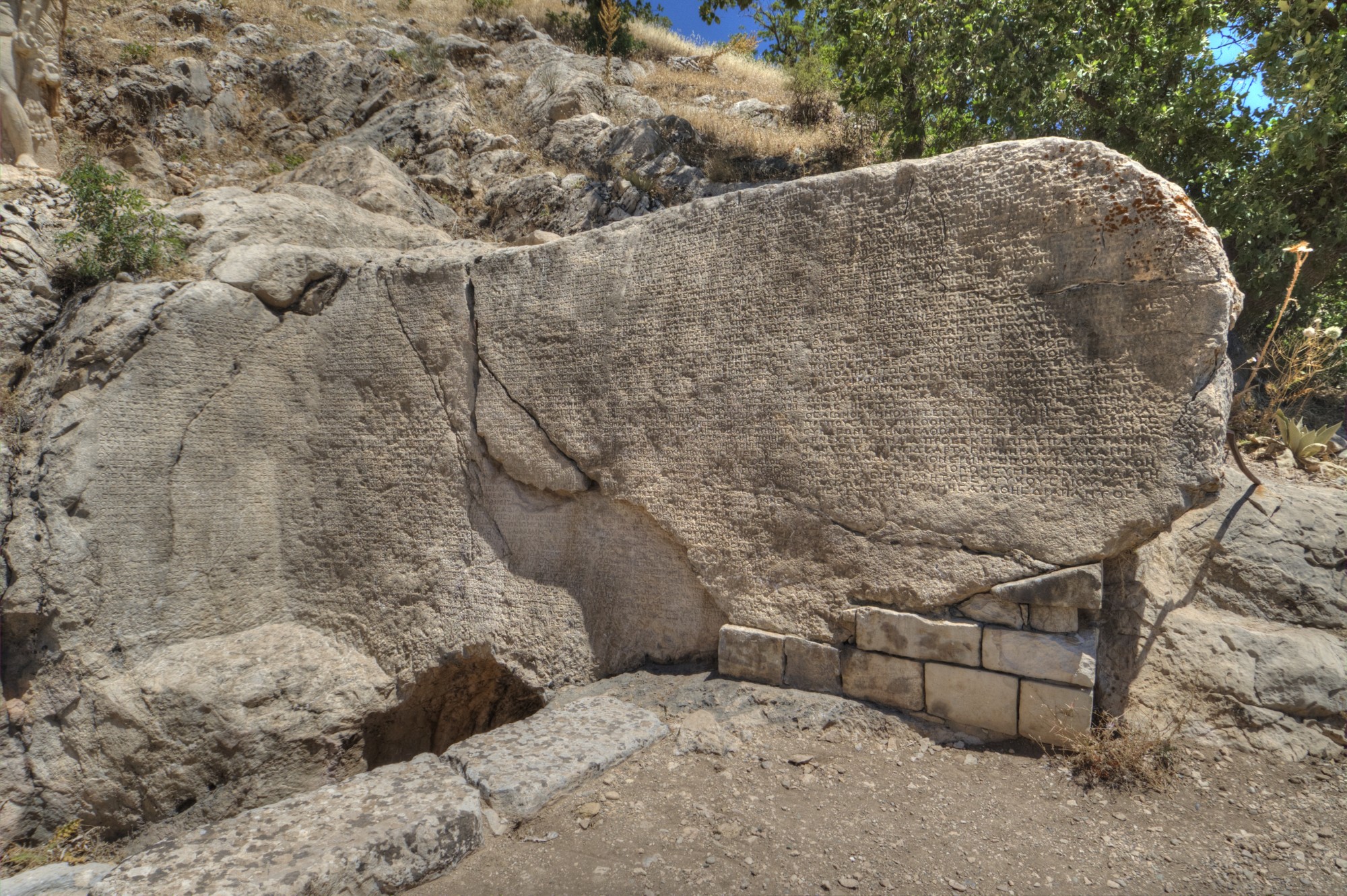
Inscription from Arsameia where the Commagene Palace is mentioned

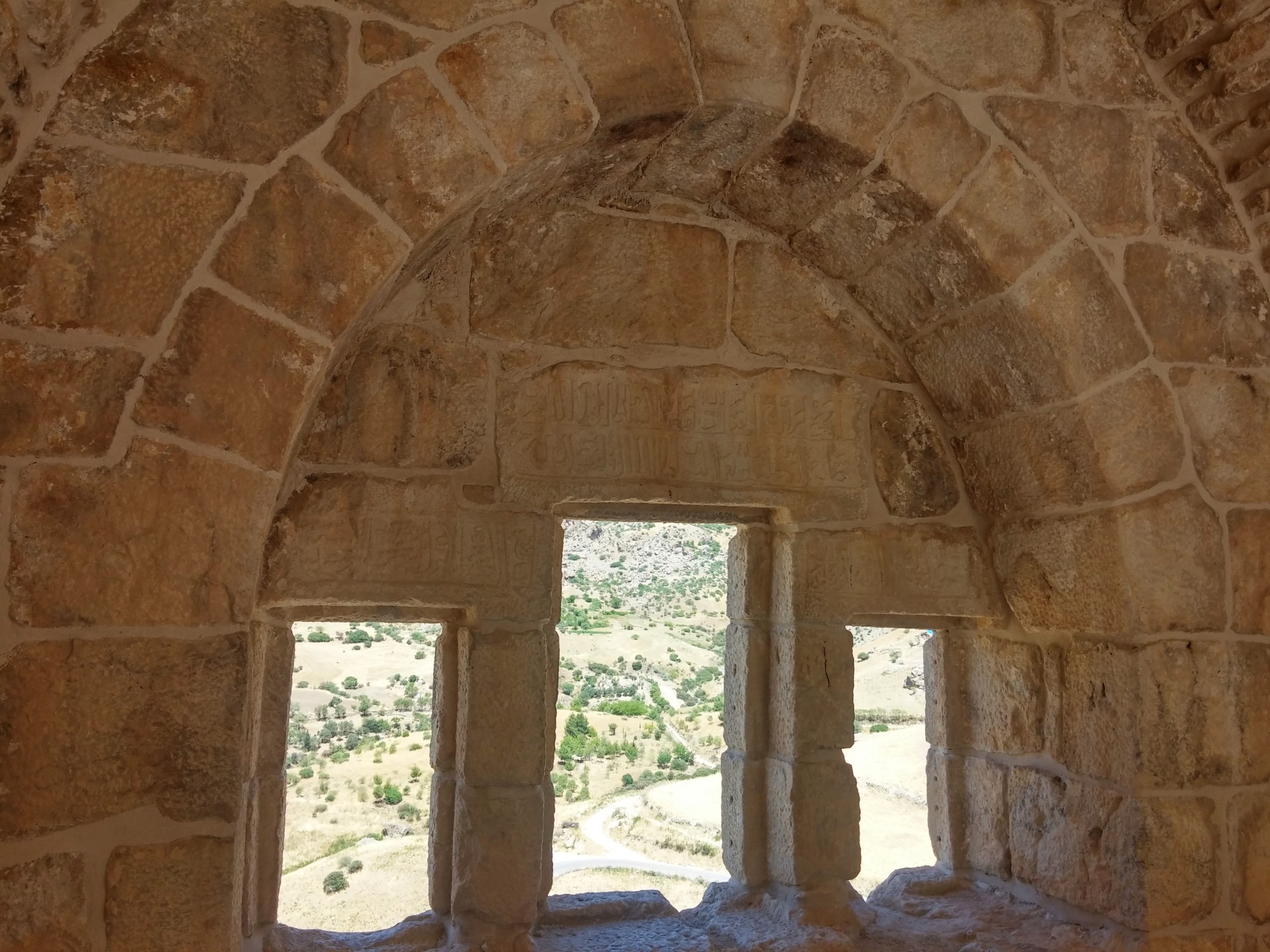
Yeni Kale, meaning New Castle, is one of the several additional attractions that await the visitors who arrive at this region of Turkey to see famous Mount Nemrut. Of course, in a land of such rich and long history as Anatolia, the term “new” does not necessarily mean that the building was built a few years ago. Actually, the fortress is referred to as “new”, because it was erected in the 13th century, which distinguishes it from the Old Fortress (Eski Kale) – the ruins of ancient Arsameia dating back to the 3rd century BCE.

On the steep hill where the New Castle stands today, there was once the palace of the rulers of the ancient Kingdom of Commagene. The inscription discovered by Arsameia by the German archaeologist Friedrich Karl Dörner revealed the existence of these structures. However, no trace has been found of this palace, and in their place, a sombre fortress was erected, clearly visible from the Acropolis of Arsameia.

The fortress owes its present shape to the Mamluks who built it at the end of the 13th century. There are inscriptions in Arabic language referring to the construction and renovation of the castle during the reign of three Mamluk sultans bearing the names of Sayf ad-Din Qalawun (1279-90), Salah ad-Din Khalil (1290-93), and Nasir ad-Din Muhammad (1293- 1341).

At this point someone might ask who were those Mameluks, to rule in Anatolia instead of the Turks? During the stormy period of history discussed here, that is the turn of the 13th and 14th centuries, Asia Minor was split into numerous political entities. This division resulted from the battle at Köse Dağ, fought between the Sultanate of Rum ruled by the Seljuk dynasty and the Mongol Empire in 1243. The defeat of the Turks resulted in a period of turmoil in Anatolia and led directly to the decline and disintegration of the Seljuk state.

Around 1300, the map of Asia Minor was a mosaic, consisting of petty kingdoms of local rulers from various Turkish families (the so-called Anatolian beyliks), and the areas controlled by the Byzantine Empire and the Empire of Trebizond. The eastern part of Anatolia was occupied by the Ilkhanate, ruled by the Mongol House of Hulagu. In the south, from the direction of Egypt and Syria, the territory of present south-east Turkey was gradually occupied by the Mamluks, who were the main opponents of the Ilkhanate.

Who were those Mamluks and where did they come from? The Arabic word mamlūk literally means property and was used to describe a slave. However, the Mamluks were more than just the slaves, for they were the elite military caste of Egypt, that evolved from soldiers recruited from the foreigners. People familiar with the history of Ottoman Empire may recall the Janissaries formation, which was formed in a very similar way, from Christian boys taken from the Balkans. The Mamluks were created as the military support of the Egyptian dynasty of the Ayyubids that ruled from the end of the 12th century and the first half of the 13th century, founded by legendary warrior Saladin. The Mamluks serving in Egypt were recruited mainly from the Kipchaks – a Turkic people settled at that time in present-day Kazakhstan and southern Russia. By joining the Ayyubids service, they converted to Islam and learned the Arabic language.

Over time, the Mamluks forces grew so strong that in 1250 they overthrew the Ayyubids and gained power over Egypt. Their state, nowadays referred to as the “Mamluk Sultanate”, survived until 1517, when Sultan Selim I of the Osman dynasty formally ended its existence. However, the Ottoman Empire did not deprive the Mamluks of all power over Egypt, as it allowed them to remain a ruling class in this area, albeit formally as the subjects of the Ottomans.

At the beginning of the 14th century, at the height of its power, the Mamluk Sultanate controlled not only the territories of Egypt, Palestine, and Syria but also a large part of Asia Minor. In the north, it reached Malatya, and in the middle of the 14th century the Eretnid Beylik (tr. Eretnaoğulları), with the capital of Sivas, became the vassal state of the Mamluks. The area of Adıyaman, which is most interesting to us because of Yeni Kale Fortress, was under the control of the Mamluks from 1298 to 1516, although the Turks of Dulkadir Beylik (tr. Dulkadiroğulları) were controlling it on their behalf.

Yeni Kale fortress was used by the Mamluks during a long-running conflict with the Ilkhanate. At the top of the fort, there is a room called “Pigeon Castle”, containing 32 niches for these birds. They were used as a means of communication, for instance while tracing the movements of the enemy before the Battle of Homs in 1281. In this battle, the Mamluks led by the Sultan Sayf ad-Din Qalawun won a decisive victory over the Ilkhanate army under the command of Möngke Temur. Interestingly, during this battle, the Christian troops of Armenian Kingdom of Cilicia, Kingdom of Georgia and Knights Hospitaller supported the Mongols. After the defeat, the Mongols withdrew to the east of the Euphrates, which from that moment marked the border between the Sultanate of the Mamluks and the Ilkhanate.

Categories
ottoman period

Yeni-Kale Fortress

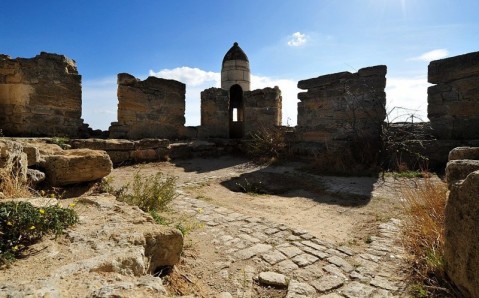
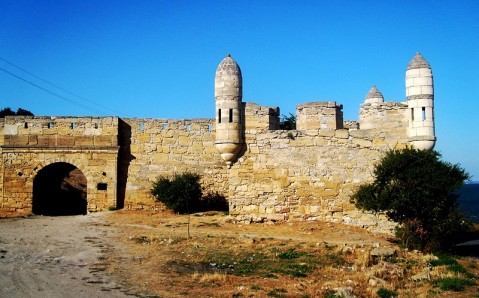
The former Turkish fortress Yeni-Kale, whose picturesque fragments stand on the coast in the eastern part of the city, is a valuable monument of architecture and is reckoned among the most interesting and symbolic attractions of Kerch. The powerful fort with original shapes was built by Turks in the early 18th century, during aggravation of the conflict between the Ottoman and the Russian empires, caused by longtime rivalry for dominance in the Black Sea.

Fortress’s construction was supervised by an eminent Italian architect with assistance of French engineers. Built within several years, the fortifications were called Yeni-Kale, which means New Fortress in Turkish. Situated on the steep shore of the Kerch Bay’s narrowest part and armed with massive guns, the fort had a high strategic importance for Ottomans and brilliantly performed its primary function: prevented Russian Empire’s ships from moving in direction of the Azov Sea and the Black Sea. In addition, Yeni-Kale was a residence of the Turkish pasha.


Occupying the territory of almost 2,5 hectares, the fortress was shaped as an irregular pentagon, surrounded by castellated walls, and was situated on several levels, due to complex coastal relief. Five semi-bastions fortified building’s corners; some of them were put far beyond walls’ perimeter. They were able to withstand a long siege and enemy’s powerful artillery fire. A deep ditch, surrounding it on three sides, was an additional protection for Yeni-Kale.

A well was dug inside the fortress, but its fresh water wasn’t sufficient for all local residents. The problem was solved by constructing an underground ceramic water supply system that connected Yeni-Kale to a spring, located a few kilometers away from the fort. In addition, fortifications’ territory housed two gunpowder storehouses, arsenal, mosque, bathhouse and dwelling houses.

In the second decade of the 18th century, the conflict between two hostile empires was temporarily settled and Yeni-Kale predominantly served as customs point. Thanks to its favorable location, the fortress had already become a brisk trade center by that time. But, fifty years later, the Russian Empress Catherine II has announced her intention to return to the solution of the Black Sea issue. Sultan of Turkey decided to forestall her and unleashed another Russian-Turkish war, but lost it. In the summer of 1771, the Ottoman garrison, in spite of reinforcements sent from Istanbul, left Yeni-Kale and yielded it up without a fight. A few years later, the fort and the whole Kerch became part of the Russian Empire.

Soon, the fortress lost its defensive importance and a military hospital was situated on its premises. About fifty years later, it was closed and the fortress was abandoned. Only picturesque gates, several walls and a bastion with elegant turrets, towering over the sea, survived from the formerly strong fort until now. Most importantly, however, is that this place has preserved inimitable atmosphere and spirit of its time.

Getting here. It is possible to reach Yeni-Kale from the Kerch bus station by bus №24.

Design a site like this with WordPress.com
Get started